Monday, January 14, 2013

Declining Birthrates, Improving Odds for College Admission

"Give-Us-Ed-Jew-K-Shun" (Image from Flickr, by Anelieke B)

Over the last decade, competition for college admission has been intense due to increasing numbers of high school graduates, a number that peaked at 3.4 million in 2012-2011, according to the Los Angeles Times. However, over the next decade, competition is expected to drop, as the number of high school graduates will decline due to lower birthrates and immigration. For the 2013-2014 school year, it is estimated there will be 3.21 million high school graduates. The number is not expected to reach 3.4 million again until 2023-2024.

In California, the number of high school graduates this year is expected to be 408,467, compared with a peak of 430,292 two years ago. However, the largest declines are expected in the Northeast and Midwest, while moderate growth is projected for the South. The number of Latino and Asian high school graduates is projected to grow, despite declines in immigration, while the amount of black and white graduates should drop.

Because of declining numbers of high school graduates, many universities will have to change their recruiting policies and methods. Many will spend more on recruiting older adults and out-of-state or foreign students. Fewer applicants will also likely lead to increased competition between schools for eligible students. This could result in reductions in tuition and increases in student aid to attract more students.

Today in Labor History—January 14


January 14, 1868 - Eighty-five delegates from 41 locals held the third convention of the National Bricklayers Union in New York City to organize for the eight-hour workday. (From Workday Minnesota)
Brooklyn Trolley Strike (Cover of Harpers) 1895
January 14, 1895 – A Brooklyn trolley strike began on this date (lasting until Feb. 28). The militia was called out and martial law declared in order to suppress it. Members of the Knights of Labor battled militiamen in the streets. (From the Daily Bleed and Wikipedia)

January 14, 1914 – The trial of Suhr and Ford began on this date in Marysville, California. Suhr and Ford were IWW (Wobbly) organizers who were ultimately convicted for their alleged role in the gun battle at Durst Ranch in Wheatland. (From the Daily Bleed and the IWW).

January 14, 1941 – A. Philip Randolph, president of the Brotherhood of Sleeping Car Porters called for a March on Washington to demand racial integration of the military and equal access to defense-industry jobs. (From theDaily Bleed)

January 14, 1976 – A wave of wildcat strikes spread across Spain to Barcelona, with the formation of workers' assemblies and the defiance of the mainstream unions and government. (From the Daily Bleed)

Sunday, January 13, 2013

Today in Labor History—January 13


Louis II of Flanders (1330-1384)
January 13, 1349 – Louis of Flanders took Ghent, ending a workers’ revolt by Flemish weavers. (From the Daily Bleed)

January 13, 1794 – Tobacco workers demonstrated for improved conditions, México City. (From the Daily Bleed)

Protesters Being Driven Out of Tompkins Square Park by Police
January 13, 1874—The original Tompkins Square Riot occurred on this date. Unemployed workers were demonstrating in New York's Tompkins Square Park, when mounted police charged into the crowd, beating men, women and children indiscriminately with clubs, leaving hundreds of casualties in their wake. Police Commissioner Abram Duryee said, "It was the most glorious sight I ever saw." The demonstration occurred during the depression of 1873-1877, the worst depression in the history of the U.S. until the Great Depression of the 1930s. Over 3 million were unemployed. In the winter of 1873, alone, 900 people starved to death, and 3,000 deserted infants on doorsteps. (From the Daily Bleed, Lutins.org, AFGE)

January 13, 1894 – A revolution in Sicily was crushed by government troops.(From the Daily Bleed)

January 13, 1914 – IWW [Industrial Workers of the World] organizer Joe Hill was falsely arrested for murder, Utah. (From the Daily Bleed)

January 13, 1957 -- The death penalty was enacted for Hungarian strikers as government called for order and quiet. (From the Daily Bleed)

Saturday, January 12, 2013

Today in Labor History—January 12

Jack London, 1903

January 12, 1876 -  Novelist Jack London was born on this date. London once wrote that a scab was "After God had finished the rattlesnake, the toad, the vampire, He had some awful substance left with which He made a scab. A scab is a two-legged animal with a cork-screw soul, a water-logged brain, a combination backbone of jelly and glue. Where others have hearts, he carries a tumor of rotten principles." (From Workday Minnesota)

January 12, 1928 – Police raided the IWW (Industrial Workers of the World) Hall, in Walsenburg, Colorado. (From the Daily Bleed)
Cox's Army (From ExplorePAHistory.com)
 January 12, 1932 – 12,000 marchers from Father Cox's Shantytown in Pittsburg arrived in Washington, D.C. The shantytown, near St. Patrick's Catholic Church in the Strip District of Pittsburgh, lasted from 1929 to 1932, and was the staging base for the Reverend James Cox's unemployed army. On December 1931, 60,000 unemployed workers had rallied at Pitt Stadium in the Oakland neighborhood of Pittsburgh. (From the Daily Bleed)

January 12, 1933 – The anarchist uprisings which began on January 8 in Spain were brutally suppressed. In Andalusia, police and army buildings were attacked and the anarcho-trade unionists seized public buildings, proclaiming Libertarian Communism there. However, in the governmental repression that followed, villagers in Casas Viejas were burned alive and assassinated. (From the Daily Bleed)

January 12, 1962 – President Kennedy signed Executive Order 10988, guaranteeing federal workers the right to join unions & bargain collectively. (From the Daily Bleed)

Friday, January 11, 2013

The Right to an Education or The Obligation to Be Sorted for Capital


The Left is fond of extolling the virtues of a free public education system, particularly the delusion that it increases social mobility and promotes liberty. Aside from the fact that few people move up in social class, regardless of their success in school, the system is not truly free. It is a taxpayer subsidy to business that ensures there are sufficiently educated workers to do the jobs employers want done and to consume the products and services they are selling.

In “Science and Education in Capitalism,” Ruthless Criticism points out that education serves as a sorting mechanism for capital, funneling future workers into the hierarchy of jobs. School does not simply deliver knowledge, training and skills to students, but does so per unit time. During exams, students demonstrate how many questions they can correctly answer within a given amount of time. Consequently, it is not their knowledge we are assessing, but their efficiency compared with their peers, exactly what employers are looking for.

Grades do not tell us how much a student knows or how well they can solve problems. They simply tell us how a student has performed in relationship to his or her peers and give an indication of how that student will be sorted in the future. The better the grades, the more advanced classes that student can take, the better college he or she can attend, the more impressive his or her resume, and the better the chances of a higher paying job.

Most jobs do not require brilliant workers. Thus, the state does not need to invest much into public education—just enough to ensure there are sufficient workers with the minimum skills necessary for the job (a few highly trained people to be managers, supervisors and bosses, and lots of average people with minimal training to do the rest of the work). Of course there is also a need for scientists, but from the perspective of the employing class this is solely to create new and better products that can be sold and patented, innovations that give them an edge over competitors. Scientists working to improve public health, in contrast, are a burden as they contribute to regulation and legislation that impairs profit-making.

The rationality of keeping education costs low has been amply demonstrated over the last four years, as states have slashed education budgets without harming the profitability of business. In fact, corporate America has made record profits in that same time period despite the divestment from public education, while a surplus of highly trained workers and scientists remain jobless or accept low paying jobs that have nothing to do with their training.

The needs of capital also determine what content is taught. An understanding of American history sufficient to celebrate the 4th of July with pride serves the interests of capital by ensuring there will be a supply of cannon fodder for its wars, whereas knowledge of Haymarket, Homestead, the IWW and Ludlow might lead one to rebel against capital. Hence, the former takes up a great deal of the history curriculum, while the latter, if it is taught at all, takes up no more than a few lines in the text book.

School also prepares students for the world of work by simulating (and legitimizing) the competition that occurs in the real world, only in school the competition is for grades rather than money. However, the competition in school is no more “fair” than that of the world of employment. One’s relationship to the labor market not only determines his wealth and social status, it also determines his children’s status in school. Affluence is a great predictor of graduation rates, test scores and overall school success.

The public education system of the 20th century—the remnants of which limp along today—is inefficient in its service to capital. Since knowledge for knowledge’s sake does not increase profits, universities can do away with many of the luxuries that have allowed professors to do basic research in the past. Increasing the competition for grants (while increasing corporate sponsorship of research) increases the likelihood that research will have a potential for profitability. Distance learning, blended learning and outsourcing of teaching at the K-12 and college levels allows schools to teach the basic skills students need to compete in the job market at a much lower cost (and greater profit to the businesses that supplies these services). Doing away with tenure and seniority increases administrators’ control over staffing decisions and reduces payroll expenses by making it easier to lay off higher paid veterans. Internships and service learning may provide youth with marketable job skills, but they also provide employers with cheap or free labor that is easier to exploit than older workers.

Today in Labor History—January 11

Blake's "Lovers' Whirlwind" Illustration for Dante's Inferno (from Wikipedia)

January 11, 1804 -- The Sussex Examiner reported that English poet William Blake was tried for sedition for saying "Damn the king and damn his soldiers." (From the Daily Bleed)

January 11, 1908 – A General Strike occurred in Buenos Aires Argentina.(From the Daily Bleed)
New York Modern School, 1911

January 11, 1911 – The first American "Modern School," based on ideas of Francisco Ferrer, was founded by a group including Leonard Abbott, Alexander Berkman and Emma Goldman, in New York City. (From the Daily Bleed)
Children of Striking Textile Workers Being Sent to Live With Family in NY
January 11, 1912 – The IWW-organized (Industrial Workers of the World) "Bread & Roses" textile strike of 32,000 women and children began on this date in Lawrence, Massachusetts. The first to walk out were a group of Polish women who, upon collecting their pay, exclaimed that they had been cheated & promptly abandoned their looms. The Strike lasted 10 weeks, beginning after the legislature cut maximum working hours for women and children from 56 to 54 hours per week and the employers cut their pay along with the hours. Many sent their children to live with family or comrades in New York during the strike. The Modern School organizers and parents took in many of these children. (From the Daily Bleed)

January, 11, 1936 – Auto workers engaged in a sit-down strike at General Motors plant in Flint, Michigan. (From the Daily Bleed)

Thursday, January 10, 2013

Teachers are Terrorists and Corporate Shills


Politicians are notorious for saying stupid, embarrassing and downright insulting and hurtful things in the quest to promote their political agendas. Michael Bloomberg’s recent comparison of the United Federation of Teachers (UFT) to the National Rifle Association (NRA) ranks right up there with some of the stupidest—but here are a few other ditties (just in case you missed them):

Teachers Unions are Terrorist Organizations
In 2004, Education Secretary Rod Paige called the nation's largest teachers union, the National Education Association (NEA), a "terrorist organization" during a White House meeting with state governors.

Schools and Universities Should Be Blown Up
Since the teachers are a bunch of terrorists, it is justifiable to blow up the places where they hang. In line with this sort of thinking, right-wing education privatization cheerleader and Fordham Foundation President Chester E. Finn Jr. said that the best way to reform public education is to “Blow it up and start over,” while his counterpart, Reid Lyon, former Chief of Child Development and Behavior Branch at the National Institute of Child Health and Human Development, suggested we blow up the teachers’ colleges.

Deadly Disasters are Great for Capitalism (Er, Children)
Current Education Secretary Arne Duncan said that Katrina was the best thing that could have happened to the New Orleans schools. What he meant was that disasters are fantastic ways to rally popular support for otherwise unpopular ideas, in this case, a massive scheme to convert the entire district to charter schools and destroy the unions.71% of New Orleans children are now attending charter schools, the highest rate in the nation. All employees, including teachers and custodians, were fired and forced to reapply, and all union contracts were canceled. Many of the unionized teachers were replaced by Teach For America interns.

Michael Bloomberg: Teachers Unions are Like the NRA
“It’s typical of Congress, it’s typical of unions, it’s typical of companies, I guess, where a small group is really carrying the ball and the others aren’t necessarily in agreement. . . The N.R.A. is another place where the membership, if you do the polling, doesn’t agree with the leadership.” (NY Times)

The comparison is grotesque and offensive because it likens teachers—who see themselves as defenders of childhood innocence and purity (e.g., Sandy Hook) to gun nuts and corporate shills—who are seen by many as the defenders of psychotic, murderous rampages (e.g., Sandy Hook). Yet if we ignore the offensiveness of Bloomberg’s statement, perhaps substitute AMA or Bar Association for NRA, one can see that there is some truth to Bloomberg’s comments. Most unions are like these organizations in that they invest heavily in lobbying, buying politicians and attempting to buy legislation. It is true that rank and file union members are often alienated from and disagree with their leadership. And it is true that the leadership of unions often put their own needs, interests and agenda above those of their members.

Labor History Timeline--The Modern Era, PATCO, Decline of Unionism


1981    PATCO Strike: U.S. federal air traffic controllers began a nationwide strike after their union, the Professional Air Traffic Controllers Organization (PATCO), rejected the government's final contract offer. Most of the 13,000 strikers ignored orders to go back to work and were fired on August 5 by President Reagan for participating in an illegal work stoppage. In response, the AFL-CIO organized a protest of 400,000 in Washington, D.C. However, Reagan's action crushed the union and sets the tone for labor-management relations across the country for the ensuing 30 years, with employers beginning to take tougher stands against unions, increasingly relying on strikebreakers and mass firings, and hastening the decline in union membership. (Sources: UHWO, Shmoop Labor History,  Workday Minnesota)

1989    Pittston Coal Strike: A Wildcat strike at the Pittston mines in West Virginia spread to 11 states, with 50,000 miners participating. The strike began when 98 miners and a minister occupied the company’s Moss 3 plant in Carbo, VA. The strike began after Pittston terminated health benefits for retirees, widows and disabled miners. State troopers were called in to arrest strikers after violent conflicts occurred, yet the struggle barely made the news the U.S. Over 4,000 strikers were arrested and UMW boss Richard Trumka did everything in his power to shut down the strike and sell the workers out. They ultimately won back health benefits for current and retired miners, one of the few labor victories of the 1980s, but they also lost job security and some workplace rights. By 1995, Pittston’s workforce had declined by more than two-thirds. (Sources:UHWO, AFGE, Workday Minnesota, Wikipedia)
Scene from “Bread and Roses,” Ken Loach’s 2000 film about Justice for Janitors

1990    LAPD Attacks Justice for Janitors (J4J): J4J began in Los Angeles in response to the slashing of wages and benefits by employers. In 1983, janitors were making $7 per hour or more, with health benefits. By 1986, their wages had declined to $4.50 per hour, without benefits, as building owners subcontracted cleaning services to private contractors who cut wages and benefits to better compete with each other. The J4J strike in LA lasted throughout April, with the janitors ultimately winning a 22% raise. (Sources: UHWO, Wikipedia)
Hamlet Chicken Plant Disaster, by Mojo Nixon and Jello Biafra

1991    Hamlet Chicken Plant Disaster: A fire at the Imperial Foods poultry processing plant in Hamlet, North Carolina, killed 25 and injured 49. Workers had been locked into the facility to prevent them from taking too many breaks, thus trapping them inside and dooming them to die in the fire. In 11 years, the plant had never received a safety inspection. The owners of the plant received 20-year prison sentences. (Sources: UHWO,Wikipedia)

2001    1st State-Wide Teachers’ Strike: occurred in Hawaii. 10,000 K-12 teachers and 3,000 university faculty participated. (Sources: UHWO)

Biggest Union Vote in 70 Years?


Healthcare has continued to be one of the more profitable sectors of the economy, even during the recession. In 2009, Kaiser Permanente made $6 billion in profits (see In These Times), but still demanded concessions and layoffs, something the Service Employees International Union (SEIU) readily gave up in exchange for insignificant promises to reduce corporate interference in union organizing.

Healthcare workers who were fed up with the autocracy, corruption and wimpiness of the SEIU, (and the expulsion of Sal Roselli as head of an SEIU affiliate in 2009), created an opposition union called the National Union of Healthcare Workers (NUHW). Led by Roselli, the NUHW took on the SEIU at Kaiser Permanent, California, in a decertification vote in 2010. They lost, but the National Labor Relations Board (NLRB) ruled in July 2011 that Kaiser had colluded with SEIU and engaged in illegal campaigning and interference with NUHW organizing, thus invalidating the results of that vote.

After several failed appeal attempts by SEIU, it looks like a new decertification vote is set for early this year in what would be the largest private sector representation vote in the past 70 years.

There are several differences between 2010 and today, most notably that NUHW has formally affiliated with the California Nurses Association (CNA), one of the more “militant” unions in the state. Together, CNA and NUHW have already led two strikes against the concessions to Kaiser in the past 16 months, while CNA has engaged in numerous 1-3 day walkouts at other California hospitals. The alliance gives NUHW greater access to strike support (CNA has 85,000 members) and CNA resources to fund NUHW organizing. According to Roselli, the alliance also protects them against a forced merger with the SEIU.

The alliance between CNA and NUHW will likely inflame hostilities between CNA and SEIU, which had agreed to a truce after the 2009 ouster of Roselli. The truce was intended to facilitate organizing efforts at non-union hospitals nationwide. Yet many of the new union members were represented by SEIU, which has regularly cut lousy deals with the hospitals and sold out their members.

During the CNA-NUHW anti-concessions strikes in California, SEIU urged its members to cross the picket lines and tried (but failed) to get California legislators to weaken the state’s safe staffing laws. According to In These Times, CNA Executive Director Rose Ann DeMoro called [SEIU President] Regan a management hack, possibly the “most despicable ‘labor leader’ that we have ever encountered” because of his collaboration with hospital owners. DeMoro also said that Regan called for nurses to give up their meals and breaks and the safety of their patients to help hospitals save $400 million because of the state budget crisis” While SEIU has always been a pro-corporate business union, these actions made it even more obvious which side they are on.

While the SEIU is clearly on the side of management, the CNA and NUHW are only “militant” in comparison. Their tactic of engaging in roving one- to two-day strikes is meant to minimize public hostility, as well as the organizing and discipline necessary to sustain a protracted full-scale strike—a strategy more indicative of trepidation and conciliation than militancy. It also leaves more funds for administrative salaries since the union can avoid paying out strike benefits. In 2012, CNA paid out $2.8 million in salaries for its leaders, according to the WSWS, while spending nothing on strike benefits for its members.

CNA’s commitment to solidarity is also questionable, as it abandoned NUHW in 2009 when its turf war with SEIU first began. In a 2012 struggle against Sutter Health, CNA jeopardized the bargaining power of its members at larger sites, like Berkeley’s Alta Bates Hospital, in exchange for easier settlements at smaller sites, according to the WSWS.

Today in Labor History--January 10


Francisco Ferrer
January 10, 1859 – Radical Spanish educator Francisco Ferrer was born on this date. Ferrer started the first Modern Schools in Spain and inspired hundreds more to be created throughout the world. (From the Daily Bleed andModern School)

January 10, 1860 – The Pemberton Mill suddenly collapsed in Lawrence, Massachusetts, trapping 900 workers, mostly Irish women. The mill then caught fire, seriously injuring 116 women and killing 88. The fire inquest revealed inferior construction that was too weak to support the brick walls and heavy machinery. The engineer in charge of construction, Captain Charles Bigelow, was aware of this, but was still acquitted of criminal intent. (From theDaily Bleed)

January 10, 1904 – The U.S. Bookbinders Union, No. 147, founded. (From the Daily Bleed)

Train Overturned During 1905 Strike
January 10, 1905 – A revolutionary strike of workers occurred on this date in St. Petersburg, Russia. The revolution lasted from 1905 to 1908. (From theDaily Bleed)

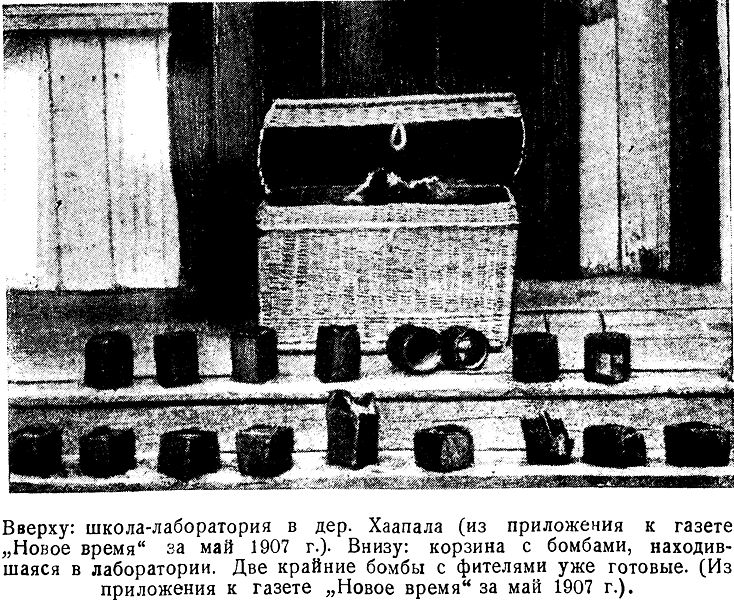
Bolshevik Bombs Discovered in 1907
Joe Hill
January 10, 1914 – IWW labor organizer/folk singer Joe Hill, allegedly killed two men during a grocery store hold-up on this date. He was ultimately framed for the murders and executed. (From theDaily Bleed)

January 10, 1957 – The Southern Christian Leadership Conference (SCLC) was founded on this date, with Martin Luther King, Jr. becoming its president. (From theDaily Bleed)

January 10, 1994 – The U.S. Supreme Court let stand the implementation of North American Free Trade Agreement (NAFTA) despite the lack of an Environmental Impact Statement. (From the Daily Bleed)