Showing posts with label revolution. Show all posts

Tuesday, June 11, 2013

Today in Labor History—June 11


Richard II meets the rebels (from Froissart's Chronicles)
June 11, 1381 – A Peasant revolt broke out in England, calling for property to be held in common and equality for all. Also known as Wat Tyler's rebellion and marked the beginning of the end of serfdom. (From the Daily Bleed)
Wat Tyler's execution by Walworth, while Richard II watches
June 11, 1848 – The wave of European revolutions continued with the uprising in Prague. (From the Daily Bleed)

June 11, 1872 - Labor unions were legalized in Canada, following a Toronto printers' strike. (From Workday Minnesota)
Blockade of engines in W. Virginia (from Harpers)
 June 11, 1877 –The Great U.S. Railroad Strike began. (From the Daily Bleed)
Maryland national guard battling striking rail workers
 June 11, 1913 – Cops shot Black & White IWW (Industrial Workers of the World) members and AFL maritime workers who were striking against United Fruit company in New Orleans, killing one and wounding two. (From the Daily Bleed)

June 11, 1925 – During a mine workers strike against the British Empire Steel Corporation (BESCO) in Cape Breton, drunken company police attacked on horseback, beating all in their way. They then rode through the school yards, knocking down innocent children, cracking jokes that the miners were at home hiding under their beds. (From the Daily Bleed)

June 11, 1926 – The first 40-hour work week in the U.S. was won by New York fur workers. (From the Daily Bleed)

June 11, 1929 – Student strikers occupied buildings at the Universidad Nacional de Mexico.
(From the Daily Bleed)

June 11, 1957 – Chinese students fought that cops and attacked the Communist Party HQ in Hang Yang. (From the Daily Bleed)

June 11, 1968 –May Days continued into June in France with ongoing strikes and protests. In the factories of Peugeot-Sochaux, two workers were killed by the hated CRS.
(From the Daily Bleed)

June 11, 1973 – General Strike against General Franco was launched in Pamplona, Spain. (From the Daily Bleed)

June 11, 1974 – A labor dispute at the Chrysler Truck Facility erupted into a spontaneous wildcat strike lasting from June 11 through June 14. Two Dodge Truck strikers wrote, "[we wanted] to free ourselves from the tyranny of the workplace; stop being forced to sell our labor to others; stop others from having control over our lives."
(From the Daily Bleed)

June 11, 1981 – The first baseball player's strike in major-league history began midseason. (From the Daily Bleed)

June 11, 2002 – Earth First! and IWW activists Judi Bari and Darryl Cherney won $4.4 million in a false-arrest lawsuit against Oakland police and the FBI. They had been arrested for blowing up their own car while they were in it. The jury unanimously found that six of the seven FBI and OPD defendants had deliberately framed Bari and Cherney in an effort to crush Earth First! and chill participation in Redwood Summer.

Thursday, May 30, 2013

Today in Labor History—May 30

May 30, 1741 – 13 black men were burned at the stake, and 17 black men, two white men, and two white women were hanged, for their roles in a New York City slave revolt in. (From the Daily Bleed)
Mikhail Bakunin
 May 30, 1814 –Anarchist Mikhail Bakunin was born, Russia. (From the Daily Bleed)
Maxim Gorkey, 1906 (Library of Congress)
May 30, 1901 – Maxim Gorky, imprisoned for printing revolutionary literature, was released after Leo Tolstoy interceded on his behalf. Gorky later served a similar role, interceding on behalf of writers imprisoned by Stalin. (From the Daily Bleed)

May 30, 1912 – U.S. Marines invaded Nicaragua. (From the Daily Bleed)

May 30, 1937 - “Memorial Day massacre:” Police attacked striking steelworkers, shooting many in the back, killing 10 and wounding 100, at the Republic Steel plant in South Chicago. (From Workday Minnesota)

May 30, 1968 – May Days continued in France, which was now in the midst of a giant general strike. Trains stopped running. Airports were shut down. Millions of workers barricaded themselves in their factories. Even soccer players occupied their stadiums. Politicians warned that they were on the verge of civil war or revolution. (From the Daily Bleed)

Thursday, April 25, 2013

Today in Labor History—April 25

April 25, 1886 – The New York Times called the eight-hour workday movement "un-American" calling the public demonstrations "labor disturbances brought about by foreigners." The ruling elite created a hysteria about how the eight-hour day would ruin our economy and culture, much like they are doing today with respect to unions, teachers and collective bargaining. Other media prophesied that the eight-hour day would cause "loafing and gambling, rioting, debauchery and drunkenness." (From Workday Minnesota)

April 25, 1945 – The founding conference of United Nations began in San Francisco, California. (From the Daily Bleed)

April 25, 1974 – The Armed Forces Movement (MFA - Movimento das Forças Armadas) began its Revolt against the Portuguese dictatorship. Known as the Revolução dos Cravos ("Carnation Revolution"), the uprising ended the 48-year military dictatorship. (From the Daily Bleed)

April 25, 1993 – Over one million marched in Washington, D.C., for gay, lesbian, bisexual, & transgender rights. (From the Daily Bleed)

Sunday, January 13, 2013

Today in Labor History—January 13


Louis II of Flanders (1330-1384)
January 13, 1349 – Louis of Flanders took Ghent, ending a workers’ revolt by Flemish weavers. (From the Daily Bleed)

January 13, 1794 – Tobacco workers demonstrated for improved conditions, México City. (From the Daily Bleed)

Protesters Being Driven Out of Tompkins Square Park by Police
January 13, 1874—The original Tompkins Square Riot occurred on this date. Unemployed workers were demonstrating in New York's Tompkins Square Park, when mounted police charged into the crowd, beating men, women and children indiscriminately with clubs, leaving hundreds of casualties in their wake. Police Commissioner Abram Duryee said, "It was the most glorious sight I ever saw." The demonstration occurred during the depression of 1873-1877, the worst depression in the history of the U.S. until the Great Depression of the 1930s. Over 3 million were unemployed. In the winter of 1873, alone, 900 people starved to death, and 3,000 deserted infants on doorsteps. (From the Daily Bleed, Lutins.org, AFGE)

January 13, 1894 – A revolution in Sicily was crushed by government troops.(From the Daily Bleed)

January 13, 1914 – IWW [Industrial Workers of the World] organizer Joe Hill was falsely arrested for murder, Utah. (From the Daily Bleed)

January 13, 1957 -- The death penalty was enacted for Hungarian strikers as government called for order and quiet. (From the Daily Bleed)

Thursday, January 10, 2013

Today in Labor History--January 10


Francisco Ferrer
January 10, 1859 – Radical Spanish educator Francisco Ferrer was born on this date. Ferrer started the first Modern Schools in Spain and inspired hundreds more to be created throughout the world. (From the Daily Bleed andModern School)

January 10, 1860 – The Pemberton Mill suddenly collapsed in Lawrence, Massachusetts, trapping 900 workers, mostly Irish women. The mill then caught fire, seriously injuring 116 women and killing 88. The fire inquest revealed inferior construction that was too weak to support the brick walls and heavy machinery. The engineer in charge of construction, Captain Charles Bigelow, was aware of this, but was still acquitted of criminal intent. (From theDaily Bleed)

January 10, 1904 – The U.S. Bookbinders Union, No. 147, founded. (From the Daily Bleed)

Train Overturned During 1905 Strike
January 10, 1905 – A revolutionary strike of workers occurred on this date in St. Petersburg, Russia. The revolution lasted from 1905 to 1908. (From theDaily Bleed)

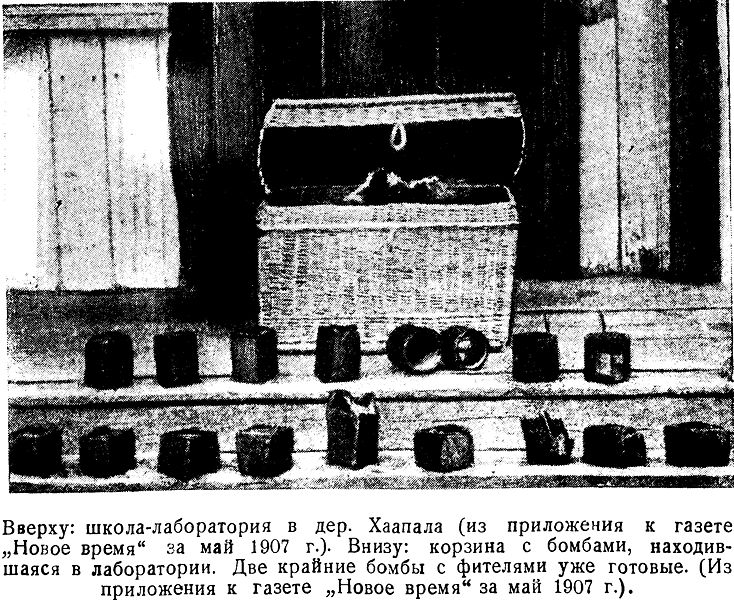
Bolshevik Bombs Discovered in 1907
Joe Hill
January 10, 1914 – IWW labor organizer/folk singer Joe Hill, allegedly killed two men during a grocery store hold-up on this date. He was ultimately framed for the murders and executed. (From theDaily Bleed)

January 10, 1957 – The Southern Christian Leadership Conference (SCLC) was founded on this date, with Martin Luther King, Jr. becoming its president. (From theDaily Bleed)

January 10, 1994 – The U.S. Supreme Court let stand the implementation of North American Free Trade Agreement (NAFTA) despite the lack of an Environmental Impact Statement. (From the Daily Bleed)

Tuesday, January 8, 2013

Today in Labor History—January 8


January 8, 1811 – A slave uprising occurred on this date in New Orleans. (From the Daily Bleed)

Mary Kenney O'Sullivan (from I Am Woman blog)
January 8, 1864 – Mary Kenney O'Sullivan (1864-1943) was born on this date in Hannibal, Missouri. O’Sullivan was the first American Federation of Labor (AFL) woman organizer. She also organized the Woman's Bookbinder Union in 1880 and was a founder of the National Women’s Trade Union League (WTUL) in 1903. (From the Daily Bleed)

January 8, 1883 – In Lyon, France the trial of the anarchists known as "the 66" began on this date. "The 66" were accused of promoting workers' strikes and the abolition of the rights of property, family, fatherland and religion. Leaders like Peter Kropotkin, Emile Gautier, Joseph Bernard and Toussaint Bordat received four years in prison, while 39 of their cohorts received sentences ranging from six months to three years. (From the Daily Bleed)

January 8, 1892 – An anarchist revolt occurred in Andalusia involving hundreds of farm laborers who took the town of Jerez. The uprising was quickly subdued and its leaders captured and tortured. Four were sentenced to death and executed on February 10. (From the Daily Bleed)

January 8, 1933 – An anarchist uprising began in Barcelona, Madrid and Valencia. While the northern uprising was quickly suppressed, another anarchist uprising broke out in the Andalusian town of Casas Viejas on January 11. (From the Daily Bleed)

January 8, 1969 – In San Jose, California, teachers joined with striking students to oppose the Vietnam War. (From the Daily Bleed)

January 8, 1991 – 200 Teamsters leaders held a "Labor for Peace" meeting to oppose the Gulf War, New York City. (From the Daily Bleed)

Thursday, October 4, 2012

Today in Labor History—October 4


October 4, 1887 – Louisiana sugar workers went on strike, during which 37 unarmed black workers were murdered by Louisiana Militia, aided by bands of vigilantes. (From the Daily Bleed)

October 4, 1910 – 20 year old King Manuel II of Portugal was overthrown in a revolution. On October 7, the anti-church provisional government ordered all nuns and monks to leave the country. A republic was declared and the King fled to England. In 1908, the previous king had been assassinated.

October 4, 1946 – The U.S. Navy took over oil refineries to break a 20-state post-war wildcat strike.

October 4, 1989 - The United Mine Workers of America re-affiliated with the AFL-CIO, after decades of conflict with the organization. The UMWA had left the AFL in the 1930s when they refused to organize the auto and steel industries and played a pivotal role in the formation of the CIO. However, they withdrew from the CIO in 1942 in a dispute over labor-management relations during World War II. They were readmitted to the AFL in 1946, but left after a year when their president, John L. Lewis refused to sign the non-Communist affidavit required by the Taft-Hartley Labor Act. (From Workday Minnesota)

Tuesday, September 25, 2012

Today in Labor History—September 25

September 25, 1789 - The first Congress of the United States adopted the amendments to the Constitution known as the Bill of Rights, including the first amendment, which “guarantees” freedom of speech and the right to peaceably assemble, the legal basis for most workplace rights. (From Workday Minnesota)

September 25, 1894 - Playwright John Howard Lawson was born on this date in New York City. Lawson wrote several plays about the working class, includingThe International (1928), which depicts a world revolution by the proletariat, andMarching Song (1937), about a sit-down strike. In the late 1940s, Lawson was blacklisted as a member of the “Hollywood Ten” for his refusal to tell the House Committee on Un-American Activities about his political allegiances. (FromWorkday Minnesota)

Wednesday, August 22, 2012

Today in Labor History—August 22


General Toussaint Louverture
August 22, 1791 -- Encouraged by the French and American revolutions, 100,000 Haitian slaves revolted, led by Toussaint Louverture. They first attacked the French, and then went after Spanish and English troops, winning their freedom in 1793. In 1804, Haiti became first free black country in the world. The US refused recognition of Haiti until 1865 as a result of pressure from Southern slaveholders.

August 22, 1893 – Sam Gompers and other trade unionists met with New York mayor Gilroy pressings for a municipal public works program to relieve unemployment.

August 22, 1917 – Italian police opened fire on protesters against the war hunger, most of whom were women. The next day, a General Strike was declared. On the 24th, a state of siege was declared, but the strike continued until the 26th. Police violence during the strike resulted in the deaths of 60 people. (From the Daily Bleed)

August 22, 1947 – A two-month strike by United Packing Workers began in Canada. (From the Daily Bleed)

August 22, 1978 -- Sandinistas captured the Nicaraguan National Palace launching the Sandinista revolution. (From the Daily Bleed)

Monday, June 11, 2012

Today in Labor History—June 11


Richard II meets the rebels (from Froissart's Chronicles)
June 11, 1381 – A Peasant revolt broke out in England, calling for property to be held in common and equality for all. Also known as Wat Tyler's rebellion and marked the beginning of the end of serfdom. (From the Daily Bleed)
Wat Tyler's execution by Walworth, while Richard II watches
June 11, 1848 – The wave of European revolutions continued with the uprising in Prague. (From the Daily Bleed)

June 11, 1872 - Labor unions were legalized in Canada, following a Toronto printers' strike. (From Workday Minnesota)
Blockade of engines in W. Virginia (from Harpers)
 June 11, 1877 –The Great U.S. Railroad Strike began. (From the Daily Bleed)
Maryland national guard battling striking rail workers
 June 11, 1913 – Cops shot Black & White IWW (Industrial Workers of the World) members and AFL maritime workers who were striking against United Fruit company in New Orleans, killing one and wounding two. (From the Daily Bleed)

June 11, 1925 – During a mine workers strike against the British Empire Steel Corporation (BESCO) in Cape Breton, drunken company police attacked on horseback, beating all in their way. They then rode through the school yards, knocking down innocent children, cracking jokes that the miners were at home hiding under their beds. (From the Daily Bleed)

June 11, 1926 – The first 40-hour work week in the U.S. was won by New York fur workers. (From the Daily Bleed)

June 11, 1929 – Student strikers occupied buildings at the Universidad Nacional de Mexico.
(From the Daily Bleed)

June 11, 1957 – Chinese students fought that cops and attacked the Communist Party HQ in Hang Yang. (From the Daily Bleed)

June 11, 1968 –May Days continued into June in France with ongoing strikes and protests. In the factories of Peugeot-Sochaux, two workers were killed by the hated CRS.
(From the Daily Bleed)

June 11, 1973 – General Strike against General Franco was launched in Pamplona, Spain. (From the Daily Bleed)

June 11, 1974 – A labor dispute at the Chrysler Truck Facility erupted into a spontaneous wildcat strike lasting from June 11 through June 14. Two Dodge Truck strikers wrote, "[we wanted] to free ourselves from the tyranny of the workplace; stop being forced to sell our labor to others; stop others from having control over our lives."
(From the Daily Bleed)

June 11, 1981 – The first baseball player's strike in major-league history began midseason. (From the Daily Bleed)

June 11, 2002 – Earth First! and IWW activists Judi Bari and Darryl Cherney won $4.4 million in a false-arrest lawsuit against Oakland police and the FBI. They had been arrested for blowing up their own car while they were in it. The jury unanimously found that six of the seven FBI and OPD defendants had deliberately framed Bari and Cherney in an effort to crush Earth First! and chill participation in Redwood Summer.

Wednesday, May 30, 2012

Today in Labor History—May 30

May 30, 1741 – 13 black men were burned at the stake, and 17 black men, two white men, and two white women were hanged, for their roles in a New York City slave revolt in. (From the Daily Bleed)
Mikhail Bakunin
 May 30, 1814 –Anarchist Mikhail Bakunin was born, Russia. (From the Daily Bleed)
Maxim Gorkey, 1906 (Library of Congress)
May 30, 1901 – Maxim Gorky, imprisoned for printing revolutionary literature, was released after Leo Tolstoy interceded on his behalf. Gorky later served a similar role, interceding on behalf of writers imprisoned by Stalin. (From the Daily Bleed)

May 30, 1912 – U.S. Marines invaded Nicaragua. (From the Daily Bleed)

May 30, 1937 - “Memorial Day massacre:” Police attacked striking steelworkers, shooting many in the back, killing 10 and wounding 100, at the Republic Steel plant in South Chicago. (From Workday Minnesota)

May 30, 1968 – May Days continued in France, which was now in the midst of a giant general strike. Trains stopped running. Airports were shut down. Millions of workers barricaded themselves in their factories. Even soccer players occupied their stadiums. Politicians warned that they were on the verge of civil war or revolution. (From the Daily Bleed)

Wednesday, April 25, 2012

Today in Labor History—April 25

April 25, 1886 – The New York Times called the eight-hour workday movement "un-American" calling the public demonstrations "labor disturbances brought about by foreigners." The ruling elite created a hysteria about how the eight-hour day would ruin our economy and culture, much like they are doing today with respect to unions, teachers and collective bargaining. Other media prophesied that the eight-hour day would cause "loafing and gambling, rioting, debauchery and drunkenness." (From Workday Minnesota)

April 25, 1945 – The founding conference of United Nations began in San Francisco, California. (From the Daily Bleed)

April 25, 1974 – The Armed Forces Movement (MFA - Movimento das Forças Armadas) began its Revolt against the Portuguese dictatorship. Known as the Revolução dos Cravos ("Carnation Revolution"), the uprising ended the 48-year military dictatorship. (From the Daily Bleed)

April 25, 1993 – Over one million marched in Washington, D.C., for gay, lesbian, bisexual, & transgender rights. (From the Daily Bleed)

Friday, January 13, 2012

Today in Labor History—January 13


Louis II of Flanders (1330-1384)
January 13, 1349 – Louis of Flanders took Ghent, ending a workers’ revolt by Flemish weavers. (From the Daily Bleed)

January 13, 1794 – Tobacco workers demonstrated for improved conditions, México City. (From the Daily Bleed)
Protesters Being Driven Out of Tompkins Square Park by Police
 January 13, 1874—The original Tompkins Square Riot occurred on this date. Unemployed workers were demonstrating in New York's Tompkins Square Park, when mounted police charged into the crowd, beating men, women and children indiscriminately with clubs, leaving hundreds of casualties in their wake. Police Commissioner Abram Duryee said, "It was the most glorious sight I ever saw." The demonstration occurred during the depression of 1873-1877, the worst depression in the history of the U.S. until the Great Depression of the 1930s. Over 3 million were unemployed. In the winter of 1873, alone, 900 people starved to death, and 3,000 deserted infants on doorsteps. (From the Daily Bleed, Lutins.org, AFGE)

January 13, 1894 – A revolution in Sicily was crushed by government troops. (From the Daily Bleed)

January 13, 1914 – IWW [Industrial Workers of the World] organizer Joe Hill was falsely arrested for murder, Utah. (From the Daily Bleed)

January 13, 1957 -- The death penalty was enacted for Hungarian strikers as government called for order and quiet. (From the
Daily Bleed)

Tuesday, January 10, 2012

Today in Labor History—January 10


Francisco Ferrer
January 10, 1859 – Radical Spanish educator Francisco Ferrer was born on this date. Ferrer started the first Modern Schools in Spain and inspired hundreds more to be created throughout the world. (From the Daily Bleed and Modern School)

January 10, 1860 – The Pemberton Mill suddenly collapsed in Lawrence, Massachusetts, trapping 900 workers, mostly Irish women. The mill then caught fire, seriously injuring 116 women and killing 88. The fire inquest revealed inferior construction that was too weak to support the brick walls and heavy machinery. The engineer in charge of construction, Captain Charles Bigelow, was aware of this, but was still acquitted of criminal intent. (From the Daily Bleed)

January 10, 1904 – The U.S. Bookbinders Union, No. 147, founded. (From the
Daily Bleed)
Train Overturned During 1905 Strike
January 10, 1905 – A revolutionary strike of workers occurred on this date in St. Petersburg, Russia. The revolution lasted from 1905 to 1908. (From the Daily Bleed)
Bolshevik Bombs Discovered in 1907
Joe Hill
 January 10, 1914 – IWW labor organizer/folk singer Joe Hill, allegedly killed two men during a grocery store hold-up on this date. He was ultimately framed for the murders and executed. (From the Daily Bleed)

January 10, 1957 – The Southern Christian Leadership Conference (SCLC) was founded on this date, with Martin Luther King, Jr. becoming its president. (From the
Daily Bleed)

January 10, 1994 – The U.S. Supreme Court let stand the implementation of North American Free Trade Agreement (NAFTA) despite the lack of an Environmental Impact Statement. (From the Daily Bleed)

Sunday, January 8, 2012

Today in Labor History—January 8


January 8, 1811 – A slave uprising occurred on this date in New Orleans. (From the Daily Bleed)

January 8, 1864 – Mary Kenney O'Sullivan (1864-1943) was born on this date in Hannibal, Missouri. O’Sullivan was the first American Federation of Labor (AFL) woman organizer. She also organized the Woman's Bookbinder Union in 1880 and was a founder of the National Women’s Trade Union League (WTUL) in 1903. (From the Daily Bleed)

1883 – In Lyon, France the trial of the anarchists known as "the 66" began on this date. "The 66" were accused of promoting workers' strikes and the abolition of the rights of property, family, fatherland and religion. Leaders like Peter Kropotkin, Emile Gautier, Joseph Bernard and Toussaint Bordat received four years in prison, while 39 of their cohorts received sentences ranging from six months to three years. (From the Daily Bleed)


January 8, 1892 – An anarchist revolt occurred in Andalusia involving hundreds of farm laborers who took the town of Jerez. The uprising was quickly subdued and its leaders captured and tortured. Four were sentenced to death and executed on February 10. (From the Daily Bleed)

January 8, 1933 – An anarchist uprising began in Barcelona, Madrid and Valencia. While the northern uprising was quickly suppressed, another anarchist uprising broke out in the Andalusian town of Casas Viejas on January 11. (From the Daily Bleed)

January 8, 1969 – In San Jose, California, teachers joined with striking students to oppose the Vietnam War. (From the Daily Bleed)

January 8, 1991 – 200 Teamsters leaders held a "Labor for Peace" meeting to oppose the Gulf War, New York City. (From the Daily Bleed)