Tuesday, February 26, 2013

Today in Labor History—February 26


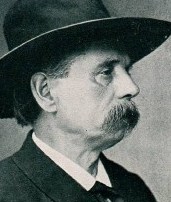
A Young Karl Marx
February 26, 1848 – 29 year-old Karl Marx published The Communist Manifesto in London. (From the Daily Bleed)

February 26, 1912 – A coal strike began in Derbyshire England, developing into a nationwide General Strike on March 1. (From the Daily Bleed)


February 26, 1915 – Armaments workers went on strike for more pay in England. (From the
Daily Bleed)
Kronstadt Rebels Attacked by Red Army, March, 1921

February 26, 1921 – In the midst of the Kronstadt uprising, delegates were sent to Petrograd tofind out about strikes occurring there. (From the Daily Bleed)

February 26, 1941 – Workers struck at Bethlehem Steel plants. (From the Daily Bleed)

Monday, February 25, 2013

Americans Working Longer, Harder and Paid Less


Huck/Konopacki Labor Cartoons

The working and living standards for the majority of Americans have been on a downward spiral since the 1970s. While workers’ productivity is up, allowing their bosses to bring in greater profits, most workers have been working longer hours and doing more work per hour, while their wages have remained stagnant, according to the recent report State of Working America, 12th Edition (Mishel et al. 2012)

Below are some of the report’s findings (summarized by the Economic Policy Institute, where Mishel is president):

In 2007, the average American worker toiled 1,868 hours, 181 hours longer (10.7% more) than in 1979—the equivalent of an extra 4.5 weeks per year. This growth was most pronounced among women, who are now working 20.3% longer than they did in 1979. However, this is primarily because there were far fewer women being paid for their labor in 1979. Overall, men saw a 4.4% increase in their working hours, and this was primarily over and above what they were already working. There was also a large increase in working hours among the lowest 20% of wage earners, whose working hours increased 22% (compared with a 7.6% increase for the top 5% of earners), again due mostly to hours over and beyond what they were already working.

One reason for the increased working hours was, of course, increased demands by employers. However, workers’ wages were stagnant during the period, in many cases not keeping up with inflation, forcing people to work longer hours to make ends meet. Thus, in terms of spending power and the value of their paychecks, workers living standards were either stagnant or declined during this period.

For example, annual income increased during this time period, but for the majority of workers this was the result of their longer working hours—not from any significant increase in hourly wages. For the lowest-wage workers, hourly wages rose only 7.7% over the past three decades. However, for the past decade, their wages have actually declined 3.2%. In contrast, the hourly wages of the top 5% of wage earners increased by 30.2%, and this does not even include the bulk of their income, which comes from non-wage compensation and investments (e.g., stock options, capital gains).


What little growth American workers have seen in hourly wages was concentrated in the late 1990s, when unemployment was low and the minimum wage was increased. Even for middle wage earners, whose overall hourly wages increased 15.8% between 1979 and 2007, total hourly wage growth was only 5.3% when 1995-2000 is excluded.

Today in Labor History—February 25


The Death Ship book cover (from Libcom)
February 25, 1882 – Ret Marut, also known as B. Traven, author of such novels as The Treasure of the Sierra Madre, The Death Ship, The Rebellion of the Hanged, The White Rose, was born on this date. (From the Daily Bleed)

February 25, 1908 – The "Washington Post" proposed that ALL anarchists should be executed (whether or not they have been convicted of any crime or offense). (From the Daily Bleed)
Leaders of the Paterson silk strike: Patrick Quinlan, Carlo Tresca, Elizabeth Gurley Flynn, Adolph Lessig, and Bill Haywood
 February 25, 1913 – The Paterson, New Jersey silk strike began, with 25,000 immigrant textile workers walking out when mill owners doubled the size of the looms without increasing staffing or wages. The strike was organized by the Industrial Workers of the World, but collapsed when mill owners exploited divisions between skilled and unskilled workers, successfully getting the skilled workforce to agree to return to work. Five strikers were killed during the 208-day walkout.  (From Workday Minnesota and the Daily Bleed)

February 25, 1964 – 172,000 students boycotted Chicago schools to protest segregation. (From the Daily Bleed)

Sunday, February 24, 2013

Today in Labor History—February 24


Children of Lawrence, MA strikers sent to live with sympathizers in New York City during the work stoppage
February 24, 1912 - Women and children were beaten by police during the Bread and Roses textile strike in Lawrence, Massachusetts. (From Workday Minnesota and the Daily Bleed)
Arrest and escorting plainclothes policemen. Petrograd. 1917
 February 24, 1917 – A Petrograd bread riot turned into revolution when soldiers refused to fire on demonstrators turned on their officers, stormed the arsenal and liberated 20,000 automatic pistols, torched the police stations and emptied the prisons. (From the Daily Bleed)

February 24, 1919 –
A new Federal Child Labor law passed and was declared unconstitutional in 1924. A similar law passed two years earlier was declared unconstitutional in 1918. (From the Daily Bleed)

February 24, 1923 –
A U.S. Labor Party convention repudiated Communism. (From the Daily Bleed)

February 24, 1939 – The Supreme Court ruled that sit-down strikes were illegal. (From the Daily Bleed)

February 24, 1965 – District 1199 Health Care Workers became the first U.S. labor union to oppose the war in Vietnam. (From the Daily Bleed)

Saturday, February 23, 2013

Today in Labor History—February 23


Traven's Supposed Birth Place, Rathaus Schwiebus about 1900
February 23, 1882 – B. Traven (1882?-1969) was born on this date in Poznañ, Poland. Traven (also known as Ret Marut, Hal Croves, Bruno Traven, Traven Torsvan, Otto Feige) wrote the Death Ship, Treasure of the Sierra Madre and numerous novels depicting working conditions among Mexican peasants and indigenous people in his Jungle series. He was also active in the Bavarian Soviet of 1918-1919. (From the Daily Bleed)

February 23, 1887 - The Journeyman Bakers National Union was chartered by the American Federation of Labor on this date. Its founder, George Block, was also nominated to head the newly-formed AFL. When he declined, Samuel Gompers was unanimously chosen. Today, the bakers union has become the Bakery, Confectionery, Tobacco Workers and Grain Millers International Union. (From Workday Minnesota)
Jean-Baptiste_Clément_recadré.jpg
 February 23, 1903 – Jean-Baptiste Clément (b.1836) died on this date. Clement was a Paris Communard, poet, singer and author of the famous song "The Time of Cherries." He was one of the last on the barricades during the commune, ultimately being forced into hiding and taking refuge in England. He was condemned to death in absentia, later returning to France after the Amnesty of 1879. Paris now has schools and a street named for him. (From the Daily Bleed)

February 23, 1917 – A strike began among women textile workers in Petrograd. Demonstrations turned into bread riots and spread throughout the city. The troops who crushed similar demonstrations in 1905 refused to put down the uprising, with many joining in by the end of the month. (From the Daily Bleed)

February 23, 1995 – Two hundred high school students rioted outside Patterson City Hall, New Jersey, in response to the shooting of a classmate by police. (From the Daily Bleed)

Friday, February 22, 2013

Today in Labor History—February 22

February 22, 1879"Révolte" first appeared in Switzerland, founded by Peter Kropotkin, François Dumarteray, and Élisée Reclus. (From the Daily Bleed)

February 22, 1892 – The founding convention of the People's Party met in St. Louis, with the support of the Knights of Labor, United Mine Workers and 20 other organizations. The party criticized political corruption, increasing concentration of wealth, and attacks on the rights of workers and farmers. (From Workday Minnesota)

February 22, 1917 – The Russian Revolution began. (From the Daily Bleed)

February 22, 1918 – At the height of the Red Scare, the office of the "Cronaca Sovversiva" was raided. Sacco and Vanzetti had written for this anarchist newspaper and donated money to it, marking their first official link to anarchist activities by the authorities.. (From the Daily Bleed)

February 22, 1921 – A wave of strikes in Petrograd occurred in opposition to terrible factory conditions and the discipline of 'war communism.' (From the Daily Bleed)

February 22, 2004 – Education Secretary Rod Paige called the nation's largest teachers union, National Education Association (NEA), a "terrorist organization" during a White House meeting with state governors. Meanwhile the Bush administration asserted the right to imprison citizens or non-citizens indefinitely without trial or access to lawyers, family members or journalists, as long as they were accused of being terrorists.  (From the Daily Bleed)

Thursday, February 21, 2013

3 of California’s “Top” Schools On the Chopping Block, And Good Riddance


What makes a “top” school, top? According to the San Francisco Chronicle (and most other media) it is test scores. Thanks to No Child Left Behind (NCLB) and Obama’s Race to the Top (RttT), test scores are all that matter these days. This has led to numerous cheating scandals, as well as a reduction in science, arts, physical education and other curricula to make room for more test preparation. It has also led to a number of other scandals, such as the one at Oakland’s American Indian Charter Schools, now under threat of closure for financial improprieties, despite its relatively high test scores.

The American Indian schools are currently being investigated by the Alameda County district attorney for funneling $3.8 million to founder and former director Ben Chavis and his wife for shady real estate deals and services, according to the San Francisco Chronicle. As director, Chavis signed school checks over to himself for properties he rented to the schools. In one case, he charged the schools $1.09 per square foot per month, when Oakland Unified was charging one-fifth of that ($2.50 per year).

The Oakland school board has asked the school to shape up and convince them their books are now in order. The board will make its final decision on March 20.

The problem is that it is not just financial improprieties that call the schools’ quality into question. Chavis, who ran the schools from 2001 until 2007, has been accused of humiliating students, swearing at them and calling them names publicly. The East Bay Express reports that he also made racist and sexist comments in front of students, while the WSWS reports he physically abused an adult visitor to the campus and forced a student to shave his head as a punishment. The Express also found that the schools’ high test scores had nothing to do with good teaching or school structure, but were the result of cherry-picking higher performing students—a form of cheating that violates OUSD’s own policies. In essence, the schools were phony “top” schools that rigged the system in order to look good, maintain high enrollment, and serve as a cover for Chavis’ embezzlement schemes.

While the OUSD is threatening to revoke the schools’ charters and shut them down, they should not be seen as the hero riding in on their white horse. According to the Express, the school board had known for years about Chavis’ abuses and misconduct, yet continually renewed the schools’ charters, citing their wonderful test scores as justification. Indeed, the OUSB, due its lack of effective oversight, was complicit in both the cheating scandal and Chavis’ embezzlement of millions of dollars from the district

The OUSD likewise had no problem with the schools’ refusal to hire unionized teachers or its rabid anti-communism (one of the schools’ “10 Commandments” was “Thou shalt be aware of quacks who believe in communism. Hast thou ever heard of illegal immigrants risking their lives to enter Cuba?”


Today in Labor History—February 21


Kommunistisches Manifest, London 1848
February 21, 1848The Communist Manifesto, written by Karl Marx and Friedrich Engels, was published in Brussels on this date. Marx then moved to London where he and his family lived in poverty while he continued to publish. There he composed his major work, Das Kapital, defining his theory of the capitalist system. He died penniless and was buried at High Gate Cemetery.  (From the Daily Bleed)
Kurt Eisner, President of the Bavarian Socialist Republic
 February 21, 1919 – Kurt Eisner, an activist in the Bavarian revolution and president of the Republic of Councils, was assassinated by extremists in Munich. The Central Council of the Republic declared a General Strike and state of siege in response. (From the Daily Bleed)

February 21, 1934 – Augusto Cesar Sandino, Nicaraguan independence fighter, was assassinated in Managua by Somoza's National Guard. While in exile in México during early 1920s, Sandino participated in strikes led by the IWW. Inspired by the IWW, he adopted the IWW's black & red colors for the revolutionary Nicaraguan flag. (From the Daily Bleed)

February 21, 1965 –
Malcolm X was assassinated in the Audubon Ballroom, New York City. (From the Daily Bleed)

Wednesday, February 20, 2013

Testing Causes Failure


The high stakes tests required by No Child Left Behind are designed to increase the number of failing schools (see here and here), thus forcing them to adopt free market reforms like reconstitution, charter school conversion, or hiring private tutors and curriculum consultants. However, as Valerie Strauss points out in a recent piece in her Answer Sheet blog, the increasing emphasis on high stakes tests and the pressure to improve scores may also be increasing student anxiety and their ability to perform well on the exams.
Huck/Konopacki Labor Cartoons
 Test anxiety is considered a psychological condition that goes well beyond the typical nervousness that most people experience before a test. Sufferers experience anxiety so intense that it impairs their ability to recall basic facts, comprehend test questions, and perform to their potential. Thus, the test results that are being used to punish schools and districts and that are driving much of the reform movement are likely skewed, making student achievement and school quality appear much worse than they are.

Straus points out that it is difficult to know exactly how pervasive the problem is, but the American Test Anxiety Association believes as many as 20% of students suffer from substantial test anxiety, while  an additional 18% may experience some degree of test anxiety. The problem may be becoming more prevalent because of the intense emphasis schools and districts are placing on state and federal exams. Competition for slots in high status universities may also be contributing the problem by increasing the pressure to do well on SATs, Advanced Placement and even course unit exams.

Strauss’ article provides some useful tips from Annie Murphy Paul, some of which I have been using with my students to varying degrees of success. Paul’s first suggestion is to “Unload on paper.” I call it a brain dump. The way it works is that we review together before the test, and then I have students clear everything from their desks, give them scratch paper and have them dump as much onto their scratch paper as they can remember from review, lectures, and homework before beginning the test. I even refrain from passing out the tests for five minutes to give them time and encouragement to do this rather than succumbing to the temptation to rush into the test to “get it over with.”

The rationale for this strategy is that when students feel nervous, their thinking becomes muddled and their ability to recall is hindered. Anxieties can use up some of the working memory. By doing a “brain dump” prior to even seeing the test, the stakes are lowered and the memories are fresher. It is kind of like being given permission to use a cheat sheet or having open notes, either of which can serve as a “crutch” that relaxes students by giving them the sense they have extra support, thus relieving some of the anxiety.

Paul also points to some research that showed positive effects from asking students to write about their anxieties prior to a test. While seemingly counterintuitive (i.e., this might heighten the cycle of negative thinking), studies show that it actually improved test scores. One explanation is that it helps to affirm and legitimize students’ feelings, which is an important step toward overcoming negative thinking.

She also suggests that test anxiety may be especially bad among girls and minority students because of “stereotype threat,” the fear that poor test performance will confirm negative stereotypes about their gender or race. Writing about such feelings prior to taking the test may help affirm this kind of thinking, too, and Paul points to a study that supports this hypothesis.

Paul’s final suggestion is to lead students in relaxation exercises prior to exams, like a guided meditation that focuses on breathing and body awareness. This is another technique that I have been using for years, with varying degrees of success. Of course it is important to have a plan for how to deal with the occasional goof-offs who don’t take it seriously and disrupt the process for the others, but, for the most part my students do take it seriously.

I regularly debrief with my students after exams and find that the majority like the relaxation exercises and believe they help. However, there are some who continue to do poorly on exams, despite the relaxation exercises and brain dumps. I suspect that some of this stems from intense pressure by parents to perform well or from growing up around anxious parents. Therefore, like many aspects of school success, test anxiety may be influenced more by outside of school factors than by anything under the control of teachers.

So, aside from the three strategies proposed by Paul, if we really care about students’ health and emotional wellbeing (not to mention their academic success), we need to address these outside of school influences. One of the most expedient solutions is to end the obsession with accountability and testing. Since NCLB has done nothing to improve schools, and has almost certainly worsened them by taking so much class time away from actual learning and by replacing thinking and creativity with rote memorization and bubble-in testing, let’s simply do away with it. By abolishing all high stakes exams we will lose nothing in terms of school quality, but we will reduce some of the stressors contributing to student anxiety (not to mention teacher anxiety) and allow schools to restore much of the science, arts and physical education that were cut to make room for more test preparation.

Another solution is to change the way students apply for and are accepted to colleges. Ideally, every student who wants to go to college should be able to go, even if this means providing the remedial courses necessary for potential students who are not yet academically ready and vastly increasing taxes (on the wealthy) to pay for all the extra professors and classrooms. Doing this would significantly reduce the anxiety that many students feel as a result of the competition for scarce university slots. It would also increase the number of people with college degrees and their economic opportunities.

Of course the biggest influence on student anxiety may be their anxious parents. Children pick up a lot from their families, particularly behaviors, social attitudes and coping mechanisms (or lack thereof). Yet a lot adult anxieties stem from their own material insecurity (e.g., how are we going to pay the mortgage with this pay cut?) or from the burden of having too many personal, social and work-related responsibilities (e.g., how am I going to get the kids to school on time and not be late for work myself?) An increase in such anxieties is an expected consequence of the rapidly increasing worker productivity that has occurred over the last three decades, which has made the bosses richer by squeezing more work and greater profits out of their employees per hour worked, causing both a decline in living standards and a rise in work-related demands and stress.  

This source of anxiety seems more intractable since a lasting solution requires the abolition of wage labor and capitalism. However, short of this, gains could be made through collective actions by workers to raise wages and improve working conditions. Rather than simply giving the bosses the profits from our increased productivity, we could demand shorter workdays or work weeks at the same or higher pay. The Wobblies (IWW) use to call for a four hour work day and a four day work week. This might seem like a fantasy in today’s economic and political climate, but it is worth working toward as it would reduce (or end) unemployment, provide us with more time to spend with friends, family and to pursue our personal interests, while reducing anxiety and stress, thus improving overall health and wellbeing,.