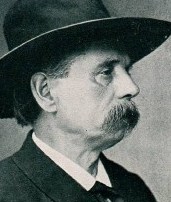
Showing posts with label Police Brutality. Show all posts

Saturday, May 11, 2013

Today in Labor History—May 11


Max Hoedel
May 11, 1878 – Emil Heinrich Maximilian Hoedel, a 21-year-old worker-anarchist, shot Emperor Guillaume I of Prussia to publicize the plight of the workers. He was executed July 16, 1878, with the following last words: "Vive la commune." (From the Daily Bleed)
May 11, 1891 – There was a national building-trades strike on this date in 1891. (From the Daily Bleed)
Pullman Strikers and National Guard Troops Outside Arcade Building, Chicago
May 11, 1894The Pullman Railroad Strike began in Chicago, Illinois. This was she largest industrial strike to date in the U.S. Eugene Debs rose to prominence as a labor leader during this strike, which was eventually broken by federal troops. At least 24 strikers were killed. (From the Daily Bleed)
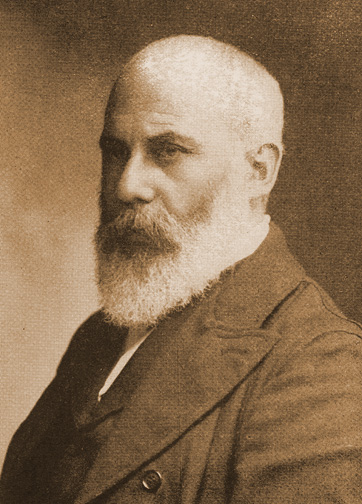
Daniel De Leon, 1902
May 11, 1914 – Marxist theorist, socialist labor party and union organizer Daniel De Leon died on this date in New York City. De Leon was also a founding member of the Industrial Workers of the World (IWW) in 1904. (From the Daily Bleed)
May 11, 1968 – The Parisian "Night of the Barricades," occurred from May 10-11, with intense fighting between students and police. Students and workers called for a General Strike on May 13. (From the Daily Bleed)
May 11, 1968 – Poor People’s Campaign caravans arrived in Washington, D.C., with Ralph Abernathy and the Southern Christian Leadership Corps being granted a permit for an encampment on the Mall. (From the Daily Bleed)
May 11, 1968 – 4,500 British Columbia lumber workers ended a 7-month strike on this date. (From the Daily Bleed)
May 11, 1983 – A General Strike was called in Chile, in support of textile workers who had been on strike since 1982. The police attacked protestors with tear gas. Two people were killed in La Victoria; 600 were arrested. (From the Daily Bleed)

Wednesday, March 6, 2013

Today in Labor History—March 6


Dred Scott (image from Wikipedia)
March 6, 1857 – The Dred Scott decision by the U.S. Supreme Court opened up federal territories to slavery and denied citizenship to blacks. (From the Daily Bleed)
1932 Version of the Little Red Songbook (from Wikipedia)

March 6, 1913 – Joe Hill's song "There is Power in a Union" first appeared in the IWW's Little Red Song Book. (From the Daily Bleed)

March 6, 1925 –Cape Breton, Canada, mine workers struck the British Empire Steel Corporation (BESCO). (From the Daily Bleed)

March 6, 1930 – 100,000 people demonstrated for jobs in New York City. Demonstrations by unemployed workers demanding unemployment insurance were occurring in virtually every major U.S. city. In New York, police attacked a crowd of 35,000. In Cleveland, 10,000 people battled police. In Detroit, a Communist Party organized unemployment demonstration brought out more than 50,000. Thousands took to the streets in Toledo, Flint and Pontiac. These demonstrations led to the creation of the House Un-American Activities Committee (HUAC), sponsored by Republican congressman Hamilton Fish, with the support of the American Federation of Labor (AFL), to investigate and quash radical activities. (From the Daily Bleed)

March 6, 1930 – A National Trade-Union Unity League council in Madison, Wisconsin, marching around Capitol Square, was attacked by UW students. Council leader Lottie Blumenthal was thrown to the ground, while students attacked other marchers and destroyed their banners and pamphlets. One of the athletes who was arrested said: "We are getting so damned many radical Jews here that something must be done." (From the Daily Bleed)

March 6, 1930 – Police killed four workers in Detroit who were demanding jobs. (From the Daily Bleed)

March 6, 1942 – Tom Mooney died on this date. Mooney was an Irish-American IWW organizer and 22-year political prisoner, locked up on trumped up charges for the San Francisco Preparedness Day bombing in 1916. (From the Daily Bleed. For more on Mooney, see here, here and here).

March 6, 1972 – A Wildcat strike occurred at the Lordstown, Ohio GM plant. (From the Daily Bleed)

March 6, 1978 - President Jimmy Carter invoked the Taft-Hartley law to quash the 1977-78 national contract strike by the United Mine Workers of America (UMWA). The UMWA had been striking since December 1977, but rejected a tentative contract agreement in early March 1978. Carter invoked the national emergency provision of Taft-Hartley and strikers were ordered back to work, but they ignored the order and the government did little to enforce it. Eventually a settlement was reached and ratified in late March. (From Workday Minnesota)

March 6, 1984 – A year-long coal strike began on this date in England. (From the Daily Bleed)

Saturday, February 23, 2013

Today in Labor History—February 23


Traven's Supposed Birth Place, Rathaus Schwiebus about 1900
February 23, 1882 – B. Traven (1882?-1969) was born on this date in Poznañ, Poland. Traven (also known as Ret Marut, Hal Croves, Bruno Traven, Traven Torsvan, Otto Feige) wrote the Death Ship, Treasure of the Sierra Madre and numerous novels depicting working conditions among Mexican peasants and indigenous people in his Jungle series. He was also active in the Bavarian Soviet of 1918-1919. (From the Daily Bleed)

February 23, 1887 - The Journeyman Bakers National Union was chartered by the American Federation of Labor on this date. Its founder, George Block, was also nominated to head the newly-formed AFL. When he declined, Samuel Gompers was unanimously chosen. Today, the bakers union has become the Bakery, Confectionery, Tobacco Workers and Grain Millers International Union. (From Workday Minnesota)
Jean-Baptiste_Clément_recadré.jpg
 February 23, 1903 – Jean-Baptiste Clément (b.1836) died on this date. Clement was a Paris Communard, poet, singer and author of the famous song "The Time of Cherries." He was one of the last on the barricades during the commune, ultimately being forced into hiding and taking refuge in England. He was condemned to death in absentia, later returning to France after the Amnesty of 1879. Paris now has schools and a street named for him. (From the Daily Bleed)

February 23, 1917 – A strike began among women textile workers in Petrograd. Demonstrations turned into bread riots and spread throughout the city. The troops who crushed similar demonstrations in 1905 refused to put down the uprising, with many joining in by the end of the month. (From the Daily Bleed)

February 23, 1995 – Two hundred high school students rioted outside Patterson City Hall, New Jersey, in response to the shooting of a classmate by police. (From the Daily Bleed)

Tuesday, January 29, 2013

Today in Labor History—January 29


January 29, 1834 – Chesapeake and Ohio Canal workers rioted on this date, prompting President Jackson to send in troops, the first time American troops were used to suppress a domestic labor dispute. Workers were rebelling because of terrible working conditions and low pay. The canal project had been designed by George Washington and was intended to facilitate transportation of goods from the Chesapeake Bay to the Ohio River Valley. Construction teams were made up mostly of Irish, German, Dutch and black workers who toiled long hours for low wages in dangerous conditions. The use of federal troops set a dangerous precedent that gave business leaders the confidence that they could count on the federal government to quash labor unrest in the future. (From the Daily Bleed and History.com

January 29, 1889 – 6,000 railway workers struck in to demand union recognition and an end to 18-hour workdays. Police and militia busted the strike. (From TWU)

January 29, 1932 - The first state unemployment insurance law was enacted in Wisconsin. (From Workday Minnesota)

January 29, 1936 – Rubber workers engaged in a sit-down strike in Akron, Ohio, helping to establish the United Rubber Workers as a national union. (From Workday Minnesota)

Thursday, November 29, 2012

Today in Labor History—November 29


November 29, 1832 - Louisa May Alcott, author, nurse and abolitionist, was born on this date. While she was most famous for her book, “Little Women,” Alcott also wrote “Work,” an autobiographical novel that exposed the exploitation of women workers. (From Workday Minnesota)

November 29, 1870 – England initiated state-run compulsory education.(From the Daily Bleed)

November 29, 1934 – Retail workers at Boston Stores in Milwaukee launched a strike at the beginning of the Christmas rush. The strike was a united effort between three unions, including clerks, teamsters & building-service employees. An extremely cold winter and the store's willingness to hold out through the holiday season eventually broke the strike. For the next 60 years, none of the city's major department stores were unionized. (From theDaily Bleed)


November 29, 1999 - Thousands of activists, students, union members, environmentalists and others shut down the World Trade Organization (WTO) summit in Seattle. It was the first large-scale demonstration in the United States to protest the “corporate agenda” and “globalization” and the beginning of many similar protests, including the current OWS movement. The WTO protest, like the OWS movement, was effective at raising awareness of corporate greed while simultaneously promoting the delusion that, with a few reforms, capitalism and democracy would serve the needs of the people. (From Workday Minnesota)

Monday, November 5, 2012

Today in Labor History—November 5


Debs leaving the White House after being released from prison, 1921
November 5, 1855 - Labor leader and socialist presidential candidate Eugene V. Debs was born in Terre Haute, Indiana.  (From Workday Minnesota)


November 5, 1911—A Francisco Ferrer statue was erected at the Place de Sainte-Catherine, Brussels, in honor of the radical educator executed by the Spanish government in 1909. The statue was destroyed by the Germans in 1915, but re-erected in 1926.
Hugo Gerlot, killed in the Everett Massacre
 November 5, 1916 -- The Everett Massacre occurred in Everett, Washington. The Industrial Workers of the World (IWW) labor activists were killed by the Everett police. On October 30, in the midst of a depression, forty IWW members arrived by boat in Everett to help support the shingle workers strike, but before they could land they were clubbed and jailed by local deputies. Later that night they were beaten. On Nov. 5, 250 more IWW supporters arrived to fight for free speech and support their jailed comrades, but gunfire broke out as soon as they arrived. Between 5 and 12 Wobblies were killed, and another 31 were injured. Both Big Bill Haywood and Samuel Gompers called on the federal government to protect the rights of working-class citizens in Everett, but no action was taken. (From the Daily Bleed)

November 5, 1918 – For the first time ever, the Farmer Labor Party appeared on the ballot in Minnesota. David Evans, a hardware merchant from Tracy, ran for governor and Tom Davis, a prominent Minneapolis labor attorney, campaigned for the office of attorney general. (From Workday Minnesota)

November 5, 1928 –5,000 banana workers struck against United Fruit Company in Columbia, 1,000 of them were killed. (From the Daily Bleed)

November 5, 1968 – Shirley Chisholm became the first black woman elected to Congress. (From the Daily Bleed)

November 5, 2001 – At least four hunger strikers who were protesting Turkish prison conditions died in a police raid. Their deaths brought the total to 45 deaths in the last year. Hundreds of jailed left-wing militants had joined the death fast to protest being kept in isolation cells in “F-type” high security prisons, subjected to torture, beatings and abuse. (From the Daily Bleed)

Wednesday, October 17, 2012

Today in Labor History—October 17


October 17, 1796 – Canada passed its Antislavery Act. (From the Daily Bleed)
Rockefeller as an Industrial Emperor, Puck magazine, 1901
 October 17, 1877 – John D. Rockefeller cut a contract with Pennsylvania Railroad, giving his Standard Oil Company a rebate on all freight carried by the line. The arrangement allowed him to monopolize virtually all oil production & transportation in the US. (From the Daily Bleed)

October 17, 1905 – Czar Nicholas II, faced with rising peasant uprisings and a General Strike in the cities, signed the Manifesto of October 17, promising civil liberties. The peasants and workers continued to riot. (From the Daily Bleed)

October 17, 1922 – Unemployed workers marched from Glasgow to London. (From the Daily Bleed)

October 17, 1939 – Warren Billings, labor activist, and falsely imprisoned for the San Francisco Preparedness Day bombing, was finally released from Folsom Prison. (From the Daily Bleed)

October 17, 1950 – The "Salt of the Earth" zinc mine strike began in Silver City, New Mexico. The strike lasted for 14-months and inspired the film “Salt of the Earth,” which was blacklisted. (From the Daily Bleed)
(See the remaining snippets from the film “Salt of the Earth” here)

October 17, 1961 – Police massacred between 200 and 300 Algerians protesting against police oppression and the curfew imposed against their community in Paris. Police searched the Algerian ghettos for FLN members, indiscriminately killing dozens of innocent Algerians before turning their guns on a large group of protesters gathered near the Seine River. The next day, the police released an official death toll of three dead and 67 wounded, a figure disputed by witnesses who observe bodies littering the area and floating in the Seine. (From the Daily Bleed)

October 17, 1977 – Nationwide wildcat hospital strikes occurred throughout Italy in protest of a sell-out settlement signed by the unions. Workers set out their own demands and battled police until the army was called in. (From theDaily Bleed)

Wednesday, October 10, 2012

Today in Labor History—October 10


October 10, 1912 – The Industrial Workers of the World (IWW) struck in Little Falls, New York. (From the Daily Bleed)

October 10, 1933 - 18,000 cotton workers struck in Pixley, California. Four were killed in the struggle, which ultimately won them a raise.. (From Workday Minnesota)

Tuesday, September 4, 2012

Today in Labor History—September 4

September 4, 1894 – 12,000 un-unionized tailors launched a successful spontaneous strike. (From the Daily Bleed)
Cripple Creek 1900

 September 4, 1903 – Police and deputy sheriffs were relieved of their duties in Cripple Creek, Colorado, and all citizens were required to register their firearms, as mine owners attempted to bust the labor union. Governor Peabody sent in the militia. In 1904 they took over the local newspaper and rounded up strikers into "bullpens." Dozens were arrested without warrants.(From the Daily Bleed)
Captured British tank, Archangel
September 4, 1918 – American troops invaded the U.S.S.R., landing at Archangel, one year after the Russian Revolution. They were soundly defeated. (From the Daily Bleed)

September 4, 1920 – Hundreds of miners assembled at Lens Creek, West Virginia in response to rumors that women and children were being killed in Logan County by the anti-union mine owners and deputy sheriffs who were on their payroll. 5,000 miners had arrived by nightfall. Many of them were armed. (From Jeremy Brecher’s, Strike!, pp135-36 and the Daily Bleed)

Fables of Faubus, Charles Mingus

September 4, 1957 – Nine Negro students tried to attend Central High School in Little Rock, Arkansas. Governor Orval Faubus ordered the National Guard to block them. (From the Daily Bleed)
William Kunstler, 1989, by Joel Seidenstain
 September 4, 1995 – Radical lawyer William Kunstler (1919-1995) died. During his long career, Kunstler defended the Chicago Seven, Angela Davis, Martin Luther King, Stokely Carmichael, Lenny Bruce, H. Rap Brown, American Indian Movement activists after the siege at Pine Ridge, and Attica prisoners after the siege there. (From the Daily Bleed and Wikipedia)

Thursday, August 16, 2012

Today in Labor History—August 16

August 16, 1819 – Police attacked unemployed workers at a demonstration in Manchester, England. (From the Daily Bleed)

August 16, 1973
– A 60-year-old United Farm Workers (UFW) member, Juan de la Cruz, was shot to death by a strike breaker during the UFW's a second grape boycott, in opposition to the Teamster’s sweetheart deals with the California growers. (From the Daily Bleed)

Sunday, August 5, 2012

Today in Labor History—August 5


Chartist riot
August 5, 1842 – The "Plug Plot" riots began in England in response to high unemployment, high food prices and declining wages. There was a spontaneous strike wave of weavers and spinners culminating in a general strike. The riot got its name when the plugs were pulled out of factory boilers. The strikers were influenced by the Chartist movement, 1838-1848. (From the Daily Bleed)

August 5, 1931 - Roughly 1,500 unemployed men stormed the plant of the Fruit Growers Express Co. in Indiana Harbor, Indiana, demanding jobs to keep from starving. The company called in the city police, who routed the jobless with clubs. (From Workday Minnesota)
Public Enemy #1: Reagan declares striking air traffic controllers in violations of law
 August 5, 1981 – President Ronald Reagan fired the striking members of the Professional Air Traffic Controllers Organization (PATCO), declaring the work stoppage illegal. Reagan's action crushed the union and sets the tone for labor-management relations across the country for the ensuing 30 years, with employers beginning to take tougher stands against unions and increasingly relying on strikebreakers and mass firings. It also hastened the decline in union membership. (From Shmoop Labor History)

Friday, May 11, 2012

Today in Labor History—May 11


Max Hoedel
May 11, 1878 – Emil Heinrich Maximilian Hoedel, a 21-year-old worker-anarchist, shot Emperor Guillaume I of Prussia to publicize the plight of the workers. He was executed July 16, 1878, with the following last words: "Vive la commune." (From the Daily Bleed)

May 11, 1891 – There was a national building-trades strike on this date in 1891. (From the Daily Bleed)
Pullman Strikers and National Guard Troops Outside Arcade Building, Chicago
May 11, 1894The Pullman Railroad Strike began in Chicago, Illinois. This was she largest industrial strike to date in the U.S. Eugene Debs rose to prominence as a labor leader during this strike, which was eventually broken by federal troops. At least 24 strikers were killed. (From the Daily Bleed)
Daniel De Leon, 1902

May 11, 1914 – Marxist theorist, socialist labor party and union organizer Daniel De Leon died on this date in New York City. De Leon was also a founding member of the Industrial Workers of the World (IWW) in 1904. (From the Daily Bleed)

May 11, 1968 – The Parisian "Night of the Barricades," occurred from May 10-11, with intense fighting between students and police. Students and workers called for a General Strike on May 13. (From the Daily Bleed)

May 11, 1968 – Poor People’s Campaign caravans arrived in Washington, D.C., with Ralph Abernathy and the Southern Christian Leadership Corps being granted a permit for an encampment on the Mall. (From the Daily Bleed)

May 11, 1968 – 4,500 British Columbia lumber workers ended a 7-month strike on this date. (From the Daily Bleed)

May 11, 1983 – A General Strike was called in Chile, in support of textile workers who had been on strike since 1982. The police attacked protestors with tear gas. Two people were killed in La Victoria; 600 were arrested. (From the Daily Bleed)