Showing posts with label CIO. Show all posts

Saturday, March 2, 2013

Today in Labor History—March 2


Whipping an Enslaved Male, Serro Frio, Brazil, ca. 1770s
March 2, 1807 - Congress abolished the African slave trade. The first American slave ship, Desire, sailed from Marblehead, Massachussetts, in 1637. Since then, nearly 15 million blacks had been transported as slaves to the Americas. Overall, the African continent had lost 50 million people to slavery and the deaths associated with it. Another 250,000 slaves were continued to be imported illegally up to the Civil War. (From Workday Minnesota and the Daily Bleed)

March 2, 1937 - John L. Lewis, president of the Congress of Industrial Organizations (CIO) and U.S. Steel President Myron Taylor signed an agreement recognizing the Steel Workers Organizing Committee as the sole representative for its workforce. The contract also included a 40-hour work week and pay for overtime. (From Workday Minnesota)
Judi Bari Portrait from the Lucha Continua mural, 3260 23rd St., Mission District, San Francisco (Image by Gary Soup)

March 2, 1997 – Earth First! activist and IWW organizer Judi Bari (b.1949) died on this date from cancer. Bari and her comrade Darryl Cherney survived a terrorist bomb in Oakland, CA, in 1990. The police and FBI immediately blamed her for the bombing, claiming that she was the terrorist and that the bomb was intended for the logging companies. She was arrested and handcuffed to her hospital bed. Bari and Cherney were eventually exonerated and won a hefty settlement for the FBI’s role in violating their civil liberties. (From the Daily Bleed)

Friday, February 15, 2013

Today in Labor History—February 15, 2012


1910 Photo of Some of the Strike Participants
February 15, 1910 – “The Uprising of the Twenty Thousand," International Ladies' Garment Workers Union Shirtwaist strike that began September 27 was declared officially over on this date by the ILGWU. By this date, 339 manufacturing firms had reached agreements with the union. 13 firms, including Triangle Shirtwaist Company did not settle. One of the demands of the demands had been for adequate fire escapes and for open doors to the streets for emergencies. In 1911, 146 girls and women were killed in the Triangle Shirtwaist fire. (From the Daily Bleed)

February 15, 1950 – The CIO expelled the Mine, Mill and Smelter Workers, the Food, Tobacco and Agricultural Workers, and the United Office and Professional Workers for “communist tendencies.” (From the Daily Bleed)

February 15, 2003 - 25 million people demonstrated against President George W. Bush’s plan to go to war in Iraq, making it the largest coordinated protest in history. Demonstrations took place in over 100 countries. (From workday Minnesota)

Tuesday, January 8, 2013

Labor History Timeline--WWII and the Post-War Wave of Strikes and Federal Suppression


1941    No Strike Pledges by AFL and CIO: The major unions sold out their members in the name of fighting fascism. (Sources:UHWO)

1943    Smith-Connally Act: The law restricted labor bargaining and organizing, required cooling off periods, imposed criminal penalties for encouraging strikes and allowed the president to seize control of struck plants. (Sources: UHWO)

1944    Port Chicago Mutiny, San Francisco Bay Area: Munitions exploded while mostly black sailors were loading ships, killing 320 and injuring 390. Unsafe working conditions continued after the disaster, prompting hundreds of the sailors to stop working and refuse to load anymore munitions. 50 of them were convicted of mutiny and sentenced to long prison terms, though the majority were released after a year and a half. (Sources:Wikipedia)

1945-1946       400,000 Miners & 750,000 Steelers Went on Strike—Part of the largest strike wave in U.S. history. At one point there were 1.6 million workers simultaneously on strike. By the end of the year, more than 4.5 million workers had deliberately stopped working. During World War II, most major unions signed no-strike pledges. As a result, there were numerous grievances and conflicts that had been building up during the war that came to a head in 1945-1946. The number of union members in the U.S. also doubled from 7 million in 1940, to 14.5 million by the war’s end. During the strike wave, over 400,000 coal miners struck, along with 750,000 steelworkers, 70,000 teamsters, 300,000 meatpackers, 175,000 electrical workers and nearly 50,000 petroleum workers and machinists. (Sources: Daily KosNew York TimesMarxists.orgCounter Punch)

1945    Navy Seizes Oil Refineries: In October, Truman used the navy to seize half of the nation’s refining capacity to break a post-war strike in 20 states. (Sources: Lutins.orgJeremy Brecker)

1946    Government Seizes Railways: In May, rail workers decided to join the miners and steelers. Such a strike threatened to bring the economy to a standstill as it would have significantly reduced the transport of goods. President Truman seized the railroads to break the strike, threatening to use the army to run the lines until the workers settled. (Sources: UHWOBits of News)

1946    Rochester General strike: The Rochester City Council fired nearly 500 city workers on May 15, 1946 for forming a union and then started to mass arrest picketers and organizers on May 21-23, provoking a General Strike later that month. (sources:Rochester LaborDaily Kos)

1946    Oakland General Strike: The last General Strike in the U.S. occurred in 1946 in Oakland, California. The strike came in response to the anti-labor policies of Hastings and Kahn’s department stores in downtown Oakland. Hundreds of store clerks (mostly women) went on strike in late October. The store enlisted the police to clear away strikers and protect strike-breaking scabs. On December 3, 100,000 workers throughout Oakland joined the strike. The AFL eventually voted to walkout in solidarity with the clerks. However, Harry Bridges, who was then head of the California CIO, refused to become involved, while the AFL quickly brokered a sellout deal on December 5, when the city manager agreed not to use police to bring in scabs deal—a deal that angered of many store clerks and teamsters who continued to picket (Modern SchoolCounterpunchLibcom).

1946    More General Strikes: Less well-known General Strikes also occurred in 1946 in Stamford, CT, and Lancaster, PA. (Sources:Jeremy Brecker)

1947    Taft-Hartley ActThis anti-labor law, which was passed in 1947, banned the General Strike, solidarity or sympathy strikes, and secondary boycotts. It prohibited closed union shops and opened the door to “right-to-work” legislation. President Truman, whose veto was overridden, called it an “intrusion on free speech.” The law also permits the president to obtain a strike-breaking injunction by claiming that national security is threatened by the strike. Many believe Taft-Hartley was a direct response by capital to the upheavals of the recent Oakland General Strike and the coal and steel strikes. (Wikipedia,Modern School)

1950    Army Seizes Railroads: Truman once again seized the railroads—this time to block a General Strike from occurring. The army occupied the railroads for two years before handing them back to their owners. (Sources: AFGE)

1952    Army Seizes Steel Mills: Truman also used the army to avert a major strike in the steel mills. The Supreme Court later ruled the move unconstitutional.  (Sources: AFGE)

1955    AFL and CIO merge: Two large pro-business unions merge into one mega-pro-business union hell bent on avoiding strikes and keeping production flowing.

1959    Longest Steel Strike in U.S. History: 90% of U.S. steel production was halted for 116 days. Eisenhower used Taft-Hartley to force the steelworkers back to work. (Sources:UHWOWikipedia)

Monday, January 7, 2013

Labor History Timeline--The Era of Depression and General Strikes


1933    National Industrial Recovery Act (NiRA): Companies that abided by NiRA codes for minimum wages and maximum working hours could not only skirt anti-trust laws, but could also enforce open shops and discriminate against union activists and workers of color. (Sources: WSWSInternational Socialist Review)
Toledo General Strike
1934    Toledo General Strike: 2 workers were killed and over 200 were injured during the Auto-Lite strike in Toledo, Ohio. The auto strike began in February, 1934, with as many as 10,000 other employed and unemployed Toledo workers joining the General Strike in May. During the General Strike, there was a five-day running battle between thousands of workers and the Ohio National Guard. Workers fought the police and National Guardsmen with their fists and with bricks (sometimes firing them with slingshots made from inner tubes). The strike ended when public outrage over the brutality against the workers forced Auto-Lite to recognize the union and offer employees a 5% raise. (Sources: WikipediaWSWS)
SF General Strike
1934    San Francisco General Strike: The longshoremen’s strike, which began as a strike for a union hiring hall and union recognition, started on May 9 and lasted 83 days, leading ultimately to the unionization of all West Coast ports. After World War One, West Coast long shore workers were poorly organized or represented by company unions. The IWW had tried to organize them with some successes, like in San Pedro, in 1922, but they were ultimately crushed by injunctions, imprisonment, deportation and vigilante violence. While longshoremen lacked a well-organized union, they retained a syndicalist sentiment and militancy. On May 9, 1934, longshoremen walked off the job at ports up and down the West Coast, soon to be followed by sailors. 2 strikers were shot dead by the bosses’ goons in San Pedro. There was also violence in Oakland and San Francisco. Street battles between the cops and strikers continued in San Francisco, heating up on July 3, and culminating in Bloody Thursday, on July 5, when 3 workers were shot by police (two of them died). The attack led to a four-day general strike that effectively shut down commerce in San Francisco, despite police violence and attempts to weaken it by national unions. (From the Daily BleedWorkday Minnesota and Wikipedia)

1934    Minneapolis General Strike: grew out of a Teamsters strike that began May 16. On Friday, July 20, 150 police opened fire on striking workers as they attempted to block a scab truck, killing two and injuring 67 others. That night, 15,000 workers protested, followed by a citywide strike of all transport workers on July 23. The next day, roughly 100,000 people participated in a march. On July 26, martial law was declared. Picketing and rallies were banned, while union leaders were arrested or and ordered to leave town. However, the strike was costing employers millions of dollars and the strike was ultimately settled with the employers recognizing the teamsters and offering workers a modest raise. (Sources: WSWSWikipedia)

1934    Eastern Textile General Strike: Over 400,000 textile workers participated in what was one of the largest strikes in U.S. history up until that point. The strike came in response to attacks by employers exploiting the new National Industrial Recovery Act (NiRA, see above), which allowed the mills to slash hours and weekly pay by 25%. In response, a General Strike of textile workers began on September 1 that spread throughout the South and the Eastern Seaboard.  The authorities in the various affected states responded by calling in National Guards, deputizing citizens, declaring martial law and other heavy handed tactics that resulted in numerous deaths and dozens of arrests. The workers’ ultimate defeat left most of the South non-unionized for the next 50 years. (Sources: International Socialist ReviewNorth Carolina History ProjectWikipedia)

1935    The Congress of Industrial Organizations (CIO) Foundedon November 9, 1935, as an opposition movement within the AFL (which expelled the CIO in 1938). Important founding members included the Steelworkers, Auto Workers and Textile Workers. The CIO ultimately merged with the American Federation of Labor (AFL) in 1955 to form the AFL-CIO.  (Sources: International Socialist ReviewWorkday Minnesota)

1935    Wagner Act: A wave of strikes and labor turmoil during the Great Depression paved the way for the Wegner Act—also known as the National Labor Relations Act (NLRA), which legitimized unions, but also created rules by which they had to abide, promoting the bureaucratization and timidity of union leadership. Even with the rules of NLRA strongly favoring the bosses, they fought it tooth and nail, finally winning passage of the Taft Hartley Act, in 1947, which weakened NLRA by blocking unions from engaging in secondary boycotts, solidarity actions with other unions, and general strikes.  (Sources: Modern School)

1937    GM Sit-Down Strike: GM recognized the United Autoworkers (UAW) after their famous 44-day sit-down strike in Flint, MI. The Flint strike was actually preceded by two days when workers at the Fisher Body plant in Cleveland launched a sit-down strike. During the Flint strike, 5,000 armed workers circled the plant to protect the workers inside. Following police attacks with tear-gas, workers fought back with fire hoses. 13 workers were injured by police gunfire. By the time the National Guard arrived, sympathy strikes had spread to GM plants across the country, with 44,000 autoworkers participating. (Sources: Workday MinnesotaDaily Bleed)
Battle of the Overpass, National Archives
1937    Battle of the Overpass: United Auto Workers were attacked by Ford security forces. UAW organizers Walter Reuther and Richard Frankensteen were badly beaten, swaying public opinion in favor of the UAW. (Sources Wikipedia)
Memorial Day Massacre, National Archives
1937    Memorial Day Massacre: The Chicago police shot and killed 10 unarmed protesting workers during the “Little Steel Strike.” 30 others were injured, including 9 who were permanently disabled. Most were shot in the back as they fled. No police officers were ever prosecuted. (From WikipediaWSWS)

1938    Hilo Massacre: On August 11938, police opened fire on 200 unarmed trade unionists protesting the unloading of a ship in Hilo Harbor, on the Big Island of Hawaii, in what became known as "the Hilo Massacre." The protest was in support of striking waterfront workers. 50 workers were injured. Police also used tear gas and bayonets. (From Workday Minnesota and the Daily Bleed)

Tuesday, December 4, 2012

Today in Labor History—December 4


December 4, 1906 – The National Federation of Postal Clerks was chartered on this date. (from the Daily Bleed)


December 4, 1951 - Walter Reuther, President of the United Auto Workers, was elected head of the Congress of Industrial Organizations (CIO). Four years later, he led the merger of the CIO and the American Federation of Labor to form the AFL-CIO. (From Workday Minnesota)

December 4, 1969--Chicago Black Panthers Fred Hampton and Mark Clark and 2 others were murdered by police, with assistance from the FBI.

December 4, 1970--Cesar Chavez was jailed for 20 days for refusing to call off the Salinas lettuce boycott. (from the Daily Bleed)

Friday, November 23, 2012

Today in Labor History—November 23


Francois-Noel Babeuf (public domain)
November 23, 1760 – French revolutionary Francois-Noel Babeuf was born on this date in St. Quentin, France. Babeuf was a communist leader in the French Revolution and a member of the Conspiracy of Equals (along with Jacque Roux and Jean Varlet) until he was betrayed to the Directory, captured and executed. (From the Daily Bleed)

November 23, 1831 – The Silk Workers' Revolt in Lyon continued, with workers occupying the Town Hall and an insurrectionary government was formed. (From the Daily Bleed)
Western Federation of Miners Poster (public domain)
 November 23, 1903 – Army troops were sent to Cripple Creek, Colorado to put down a rebellion by striking coal miners. 600 union members were thrown into a military bullpen, and held for weeks without charges. When a lawyer arrived with a writ of habeas corpus, General Bell, who led the repression, responded "Habeas corpus, hell! We'll give 'em post mortems!” (From theDaily Bleed)

November 23, 1935 - Mine Workers President John L. Lewis quit the American Federation of Labor to the lead the new Congress of Industrial Organizations, which was rapidly organizing workers in steel, auto, rubber and other major industries. (From Workday Minnesota)

Thursday, November 15, 2012

Today in Labor History—November 15


November 15, 1881 – The "Federation of Organized Trades and Labor Unions" (FOTLU), a precursor to the American Federation of Labor (AFL) was founded on this date. (From the Daily Bleed)

November 15, 1919 – The main headquarters of the New York City Wobblies (IWW) was ransacked and destroyed by agents acting under the US Attorney General Palmer. The Palmer raids were part of the first U.S. communist witch hunt, starting well before the more well known McCarthy purges. It was also were J. Edgar Hoover cut his baby teeth. (From the Daily Bleed)

November 15, 1922 –A General Strike was called by the anarchosyndicalist-inspired union FTRE. The strike united nearly all the workers and craftsmen in Guayaqui, but was brutally suppressed that ended in a massacre of the workers. (From the Daily Bleed)
Buenaventura Durutti
November 15, 1936 – On this date, 1,800 militiamen from the anarchist Durutti Column entered Madrid to fight the fascists. Madrid was the first large city in the world to be subjected to a fascist attack as a prelude to WWII. By November 18th, only 700 of the 1800 anarchist militiamen were still fighting. Many had died and others had deserted because they had gone solong without food or sleep. Durutti persuaded some to return to their positions, but was himself mortally wounded on November 20. (From the Daily Bleed)

November 15, 1938 - The Congress of Industrial Organizations (CIO) had its first constitutional convention. (From Workday Minnesota)

November 15, 1987 – 6,000 antigovernment strikers sacked the city hall of Brasov, Romania. (From the Daily Bleed)

Friday, November 9, 2012

Today in Labor History—November 9


November 9, 1933 – 200 assembly-line workers at Nash automobile in Kenosha, Wisconsin, walked out in protest of the new piece rates. Owner Charles Nash subsequently locked out all 3,000 workers. Workers at both the Racine and Milwaukee's Seaman Body plants eventually joined the strike eventually all winning raises of up to 17% and union recognition at each plant.(From the Daily Bleed)


November 9, 1935 - The Congress of Industrial Organizations (CIO) was founded on this date in 1935. Important founding members included the Steelworkers, Auto Workers and Textile Workers. The CIO ultimately merged with the American Federation of Labor (AFL) in 1955 to form the AFL-CIO. (From Workday Minnesota)
Ohel Yaaqov Synagogue Destroyed by Nazis, Kristallnacht, Wiki Commons
November 9, 1938 – Kristallnacht, "Crystal Night," began on this date in Germany, marking the beginning of the Holocaust with the killing of 91 Jews and the deportation of 30,000 to concentration camps. (From the Daily Bleed)

November 9, 1939 – J. Edgar Hoover created an FBI list of potential political detainees that included Communists, labor leaders, journalists, poets, writers critical of the FBI and some members of Congress. (From the Daily Bleed)

November 9, 1969 – 78 Indians landed on Alcatraz Island leading to a 6 month occupation. (From the Daily Bleed)

Sunday, October 7, 2012

Today in Labor History—October 7


October 7, 1879
Radical labor organizer and song writer Joe Hill was born in Gavle, Sweden. Hill was an organizer for the Industrial Workers of the World (Wobblies). He was arrested and convicted on trumped up murder charges and executed in Utah. His famous last words to IWW co-founder Big Bill Haywood were “Don’t mourn. Organize.” Some of Hill’s most famous songs were The Preacher and the Slaver, Rebel Girl, There is Power in the Union, and Casey Jones-Union Scab. (From Workday Minnesota)

October 7, 1942 – The United Mine Workers withdrew from the CIO. (From the Daily Bleed)

Friday, August 31, 2012

Today in Labor History—August 31

August 31, 1909—Francisco Ferrer, the Spanish anarchist educator and creator of the first Modern Schools (Escuelas Modernas), was charged as “author in chief” of the uprising known as the “Tragic Week.” He was executed on October 13, 1909, leading to worldwide condemnation. Hundreds of thousands of people participated in the protests that followed, while supporters created new Modern Schools throughout the world, including dozens in the U.S.
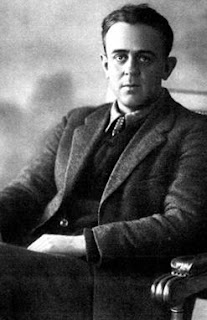
John Reed
August 31, 1919 – The Communist Labor Party of America was formed in Chicago by John Reed and others. The party evolved into the American Communist Party. (From the Daily Bleed)

August 31, 1929 – The Trade Union Unity League was founded by 690 delegates from 18 states fleeing the conservative American Federation of Labor. The League, a wing of the Communist Party, pushed for organizing workers along industrial lines, rather than by craft, like the AFL, with all workers in a given industry together in one big union. At its peak, the League had 125,000 members and, in 1930, led a protest of nearly a million jobless workers in a dozen cities to demand relief and unemployment insurance. The league fell apart in the late 1930s due to competition from the Congress of Industrial Organizations (CIO), which had launched a wave of successful organizing drives. (From the Daily Bleed)

August 31, 1933 – Italian American labor organizer, Giovanni Pippan was murdered during his campaign to organize the Italian bread wagon drivers of Chicago.
(From the Daily Bleed)

August 31, 1939 – Nearly all 430 workers at the California Sanitary Canning Company participated in a massive walkout. The majority of the workers were Mexican-American women. They were demand union recognition for their affiliation with the United Cannery, Agricultural, Packing, & Allied Workers of America (UCAPAWA). They eventually won a union contract and wage increase. (From the Daily Bleed)

August 31, 1968 -- Canadian elementary school students near Montreal occupied their school, demanding reforms. (From the Daily Bleed)

August 31, 1980 – Solidarnosc forced the Polish dictatorship to sign a 21 point bill of rights allowing workers to organize in independent unions. The agreement came after two months of crippling strikes that began at the shipyards of Gdansk. (From the Daily Bleed)


August 31, 1983 – Polish police used tear gas and water cannons on 10,000 Solidarity demonstrators. (From the Daily Bleed)

August 31, 1991 – The second Solidarity Day demonstration occurred in Washington, D.C., with over 350,000 union members demanding workplace fairness and health care reform. The first Solidarity Day took place 10 years earlier in the wake of the PATCO firings. (From Workday Minnesota)

Monday, August 13, 2012

Today in Labor History—August 13

August 13, 1889 – London Dock Workers', led by Ben Tillett and John Burns, launched a strike. (From the Daily Bleed)

August 13, 1917 – A General Strike began in Spain. (From the Daily Bleed)
Portrait of Carlos Cortez by Miguel Cortez
 August 13, 1923— Carlos Cortez, Chicano Wobbly, artist and activist was born. He spent two years in prison for refusing to fight in World War II. (From the Daily Bleed)

August 13, 1936 - John Frey, president of the Metal Trades Department of the American Federation of Labor, told the House Un-American Activities Committee that the Committee for Industrial Organization (CIO), was dominated by Communists. His testimony was the beginning of a government-sponsored blacklist and the use of "red scares" to destroy militancy and discredit leaders of the labor movement. (From Workday Minnesota)

Friday, March 2, 2012

Today in Labor History—March 2


Whipping an Enslaved Male, Serro Frio, Brazil, ca. 1770s
March 2, 1807 - Congress abolished the African slave trade. The first American slave ship, Desire, sailed from Marblehead, Massachussetts, in 1637. Since then, nearly 15 million blacks had been transported as slaves to the Americas. Overall, the African continent had lost 50 million people to slavery and the deaths associated with it. Another 250,000 slaves were continued to be imported illegally up to the Civil War. (From Workday Minnesota and the Daily Bleed)

March 2, 1937 - John L. Lewis, president of the Congress of Industrial Organizations (CIO) and U.S. Steel President Myron Taylor signed an agreement recognizing the Steel Workers Organizing Committee as the sole representative for its workforce. The contract also included a 40-hour work week and pay for overtime. (From Workday Minnesota)
Judi Bari Portrait from the Lucha Continua mural, 3260 23rd St., Mission District, San Francisco (Image by Gary Soup)

March 2, 1997 – Earth First! activist and IWW organizer Judi Bari (b.1949) died on this date from cancer. Bari and her comrade Darryl Cherney survived a terrorist bomb in Oakland, CA, in 1990. The police and FBI immediately blamed her for the bombing, claiming that she was the terrorist and that the bomb was intended for the logging companies. She was arrested and handcuffed to her hospital bed. Bari and Cherney were eventually exonerated and won a hefty settlement for the FBI’s role in violating their civil liberties. (From the Daily Bleed)

Wednesday, February 15, 2012

Today in Labor History—February 15, 2012


1910 Photo of Some of the Strike Participants
February 15, 1910 – “The Uprising of the Twenty Thousand," International Ladies' Garment Workers Union Shirtwaist strike that began September 27 was declared officially over on this date by the ILGWU. By this date, 339 manufacturing firms had reached agreements with the union. 13 firms, including Triangle Shirtwaist Company did not settle. One of the demands of the demands had been for adequate fire escapes and for open doors to the streets for emergencies. In 1911, 146 girls and women were killed in the Triangle Shirtwaist fire. (From the Daily Bleed)

February 15, 1950 – The CIO expelled the Mine, Mill and Smelter Workers, the Food, Tobacco and Agricultural Workers, and the United Office and Professional Workers for “communist tendencies.” (From the Daily Bleed)

February 15, 2003 - 25 million people demonstrated against President George W. Bush’s plan to go to war in Iraq, making it the largest coordinated protest in history. Demonstrations took place in over 100 countries. (From workday Minnesota)

Sunday, December 4, 2011

Today in Labor History—December 4


December 4, 1906 – The National Federation of Postal Clerks was chartered on this date. (from the Daily Bleed)

December 4, 1951 - Walter Reuther, President of the United Auto Workers, was elected head of the Congress of Industrial Organizations (CIO). Four years later, he led the merger of the CIO and the American Federation of Labor to form the AFL-CIO. (From Workday Minnesota)