Showing posts with label Martin Luther King. Show all posts

Thursday, May 2, 2013

Today in Labor History—May 2


It Is Forbidden to Forbid, May 1968, Paris
May 2, 1886 – Twenty-five hundred workers marched in Milwaukee for the 8-hour day. Governor Jeremiah Rusk supplied the Milwaukee National Guard headquarters with increased ammunition and the entire city police force with four companies of infantry & artillery. (From the Daily Bleed)

May 2, 1896 – U.S. Marines landed at Corrinto, Nicaragua, to "protect" US interests. (From the Daily Bleed)

May 2, 1911 - The nation’s first workers’ compensation law was passed in Wisconsin, providing benefits for employees injured in the workplace. (From the Daily Bleed)

Gustav Landauer, 1890s
May 2, 1919Gustav Landauer, Education Minister in the short-lived Bavarian workers Republic, was murdered by soldiers. Landauer was a signatory to the Ernst Joël Petition (1915), along with other leading cultural figures of the day, like Walter Benjamin, Martin Buber, Kurt Eisner, S. Fischer, Alfred Kerr, Heinrich Mann, and Thomas Mann. (From the Daily Bleed)

May 2, 1919 – Beginning of a Brazilian General Strike that involved 50,000 workers throughout Sao Paulo. (From the Daily Bleed)

May 2, 1924 – The U.S. Supreme Court upheld the involuntary sterilization of mentally retarded persons.
(From the Daily Bleed)

May 2, 1933 - Adolf Hitler abolished all labor unions, leading to the mass arrest and murder of thousands of communists, anarchists and labor activists. (From Workday Minnesota and the Daily Bleed)

May 2, 1963 –Bull Connors jailed 958 children in Birmingham, Alabama. Those not jailed got blasted with fire hoses and attacked by dogs.
(From the Daily Bleed)

Barricades, Paris, May 1968
May 2, 1968 – A Protest at University of Nanterre escalated into the French student strike. By May 20, six million workers were on strike, growing to ten million within a few days. (From the Daily Bleed)

May 2, 1968 – Though Martin Luther King, Jr. had recently been assassinated his Poor Peoples' March on Washington, D.C. proceeded as planned, led by successor Ralph Abernathy. 3,000 people erected Resurrection City on the Mall until the 17th. (From the Daily Bleed)

May 2, 1980 – Pink Floyd's hit single "Another Brick in the Wall," with its chorus of kids chanting "We don't need no education," was banned by the South African government. The song was adopted by striking black teachers and black children, upset about inferior education. The Apartheid government called the song is "prejudicial to the safety of the state." (From the Daily Bleed)

Paulo Freire, 1997 (Image by Slobodan Dimitrov
May 2, 1997 – Paulo Freire (1921-1997), Brazilian philosopher & educator, died of heart failure in Sao Paulo, Brazil. (From the Daily Bleed)

Thursday, March 28, 2013

Today In Labor History: March 28

March 28, 1871 – Paris Commune, over 200,000 people turn out at the City Hall to see their newly elected officials, whose names are read to great & festive acclaim, making this day a revolutionary festival. The red flag, raised over all public buildings, is emblematic of the Commune.

March 28, 1911: Part of the anarchist Bonnot Gang was caught & killed by cops after months of bank robbing & mayhem.

March 28, 1915: Emma Goldman was arrested for giving a lecture on contraceptives. Goldman believed that knowledge of and access to contraceptives was key to women’s ability to control their own bodies and thus their social and material wellbeing.

March 28, 1918—2,000 Canadians protested against conscription and forced police to retreat.

March 28, 1968Martin Luther King led a march of striking sanitation workers in Memphis, Tennessee. Police attacked the workers with mace and sticks. A 16-year old boy was shot. 280 workers were arrested. He was assassinated a few days later after speaking to the striking workers. The sanitation workers were mostly black. They worked for starvation wages under plantation like conditions, generally under racist white bosses. Workers could be fired for being one minute late or for talking back and they got no breaks. Organizing escalated in the early 1960s and reached its peak in February, 1968, when two workers were crushed to death in the back of a garbage truck.

March 28, 1972—A General Strike was called in Quebec to support workers locked out of La Presse newspaper. The workers went out in early April and again in May, however, some sources also give late March as the beginning of the General Strike. (Also see here and here).

Thursday, January 10, 2013

Today in Labor History--January 10


Francisco Ferrer
January 10, 1859 – Radical Spanish educator Francisco Ferrer was born on this date. Ferrer started the first Modern Schools in Spain and inspired hundreds more to be created throughout the world. (From the Daily Bleed andModern School)

January 10, 1860 – The Pemberton Mill suddenly collapsed in Lawrence, Massachusetts, trapping 900 workers, mostly Irish women. The mill then caught fire, seriously injuring 116 women and killing 88. The fire inquest revealed inferior construction that was too weak to support the brick walls and heavy machinery. The engineer in charge of construction, Captain Charles Bigelow, was aware of this, but was still acquitted of criminal intent. (From theDaily Bleed)

January 10, 1904 – The U.S. Bookbinders Union, No. 147, founded. (From the Daily Bleed)

Train Overturned During 1905 Strike
January 10, 1905 – A revolutionary strike of workers occurred on this date in St. Petersburg, Russia. The revolution lasted from 1905 to 1908. (From theDaily Bleed)

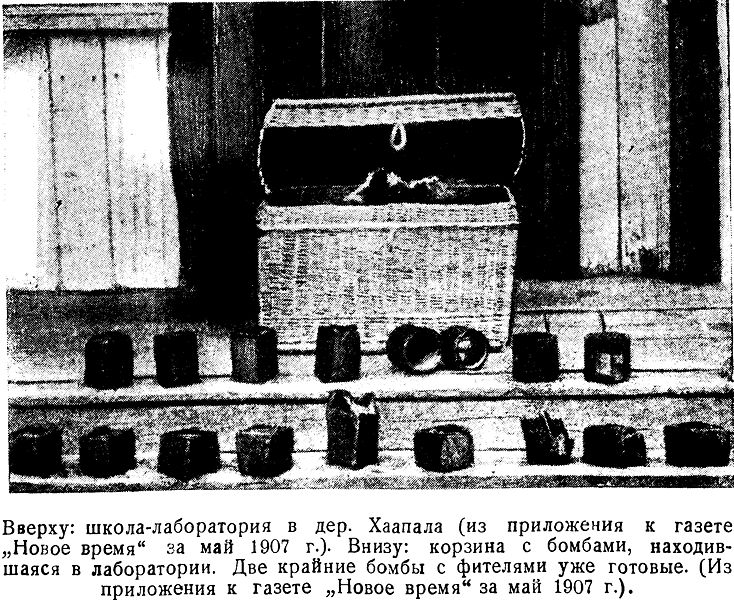
Bolshevik Bombs Discovered in 1907
Joe Hill
January 10, 1914 – IWW labor organizer/folk singer Joe Hill, allegedly killed two men during a grocery store hold-up on this date. He was ultimately framed for the murders and executed. (From theDaily Bleed)

January 10, 1957 – The Southern Christian Leadership Conference (SCLC) was founded on this date, with Martin Luther King, Jr. becoming its president. (From theDaily Bleed)

January 10, 1994 – The U.S. Supreme Court let stand the implementation of North American Free Trade Agreement (NAFTA) despite the lack of an Environmental Impact Statement. (From the Daily Bleed)

Wednesday, January 9, 2013

Labor History Timeline--The 1960s and 70s


1962    Federal Workers Granted Right to Unionize. (Sources:UHWO)

1964    Civil Rights Act Bans Workplace Discrimination. (Sources:UHWO)

1965    Delano Grape Strike: The predominantly Filipino Agricultural Workers Organizing Committee launched the strike, but it was soon joined by Cesar Chavez and Dolores Huerta’s Mexican-American National Farmworkers Association. The two groups eventually united to form the United Farmworkers (UFW). The union also initiated a nationwide grape boycott that lasted five years and ended with the first union contract for U.S. farm workers outside of Hawaii. (Sources: UHWOWorkday Minnesota)

1968    78 Miners Killed at Consolidated Coal Mines, West Virginia. (Sources: UHWO)

1968    Martin Luther King Assassinated while supporting the AFSCME Sanitation Strike, Memphis(Sources: UHWO,Wikipedia)

1970    Postal Strike:  The first mass postal strike in U.S. history began when carriers in Manhattan and Brooklyn walked off the job, but quickly spread to 210,000 of the nation’s 750,000 mail carriers. (Sources: UHWOAFGE)
Trailer for “Harlan County, USA”
1972    Bloody Coal Strike (Again) in Harlan County: Miners struck the Duke Power Company in Harlan County, Kentucky, the sight of numerous bloody strikes in the past (including the Battle of Evarts, 1931). (Sources: UHWOWikipediaThe Atlantic)

1974    Karen Silkwood Killed: Oil, Chemical and Atomic Workers union activist Karen Silkwood was assassinated during her investigation of a Kerr-McGee nuclear plant in Oklahoma. Her car was run off the road while she attempted to deliver documents to a New York Times reporter. (Sources: UHWO,Workday Minnesota)

1975    Jimmy Hoffa Disappears: (Sources: UHWO)        


Wednesday, August 29, 2012

Today in Labor History—August 29

August 29, 1968 – Chicago police brutally assaulted demonstrators, reporters and bystanders at the Democratic national convention. (From the Daily Bleed)


August 29, 1970 – LAPD brutally attacked 10,000 Chicano antiwar demonstrators, killing three, including journalist Ruben Salazar. The attacked led to a week of rioting. (From the Daily Bleed)

(Video shot by Tom Myrdahl, August 29, 1970)

Tuesday, August 28, 2012

Today in Labor History—August 28

August 28, 1918 – Big Bill Haywood and 14 other members of the IWW (Industrial Workers of the World) were sentenced to 20 years prison for draft obstruction. (From the Daily Bleed)

August 28, 1920 – West Virginia Governor Cornwell requested federal troops to guard the mines and protect scab labor during a strike by miners, resulting in rioting. (From the Daily Bleed)

August 28, 1933 – A Filipino Labor Union led a strike of 6,000 California lettuce workers demanding 40-45 cents an hour, union recognition and better working conditions. Striking white farm workers split from the Filipinos and accepted arbitration. The growers accused the Filipinos of being communists, while the highway patrol and armed vigilantes drove striking farmworkers off the farms. In September, vigilantes burned a camp of striking workers down to the ground. Police then raided their union headquarters in Salinas, arresting scores of strikers and their leaders. Despite the violence and police abuse, the strikers held out, eventually winning union recognition and 40 cents an hour wages. (From the Daily Bleed)

August 28, 1955 – Teenager Emmett Till was brutally murdered on this day in Money, Mississippi, for speaking "inappropriately" to a white woman. The brutality of the murder and the lack of justice for his family helped to mobilize opposition to segregation in America. (From the Daily Bleed)

August 28, 1963 - Martin Luther King, Jr., gave his "I have a dream . . ." speech at the March on Washington for Jobs and Freedom. March organizers included Bayard Rustin of the AFL-CIO and UAW President Walter Reuther. (From Workday Minnesota) 250,000-500,000 people converge on the Lincoln Memorial

August 28, 1970 -- The UAW Local 1714 had its first wildcat strike lasting one day.
(From the Daily Bleed)

Wednesday, May 2, 2012

Today in Labor History—May 2


It Is Forbidden to Forbid, May 1968, Paris
May 2, 1886 – Twenty-five hundred workers marched in Milwaukee for the 8-hour day. Governor Jeremiah Rusk supplied the Milwaukee National Guard headquarters with increased ammunition and the entire city police force with four companies of infantry & artillery. (From the Daily Bleed)

May 2, 1896 – U.S. Marines landed at Corrinto, Nicaragua, to "protect" US interests. (From the Daily Bleed)

May 2, 1911 - The nation’s first workers’ compensation law was passed in Wisconsin, providing benefits for employees injured in the workplace. (From the Daily Bleed)

Gustav Landauer, 1890s
May 2, 1919Gustav Landauer, Education Minister in the short-lived Bavarian workers Republic, was murdered by soldiers. Landauer was a signatory to the Ernst Joël Petition (1915), along with other leading cultural figures of the day, like Walter Benjamin, Martin Buber, Kurt Eisner, S. Fischer, Alfred Kerr, Heinrich Mann, and Thomas Mann. (From the Daily Bleed)

May 2, 1919 – Beginning of a Brazilian General Strike that involved 50,000 workers throughout Sao Paulo. (From the Daily Bleed)

May 2, 1924 – The U.S. Supreme Court upheld the involuntary sterilization of mentally retarded persons.
(From the Daily Bleed)

May 2, 1933 - Adolf Hitler abolished all labor unions, leading to the mass arrest and murder of thousands of communists, anarchists and labor activists. (From Workday Minnesota and the Daily Bleed)

May 2, 1963 –Bull Connors jailed 958 children in Birmingham, Alabama. Those not jailed got blasted with fire hoses and attacked by dogs.
(From the Daily Bleed)

Barricades, Paris, May 1968
May 2, 1968 – A Protest at University of Nanterre escalated into the French student strike. By May 20, six million workers were on strike, growing to ten million within a few days. (From the Daily Bleed)

May 2, 1968 – Though Martin Luther King, Jr. had recently been assassinated his Poor Peoples' March on Washington, D.C. proceeded as planned, led by successor Ralph Abernathy. 3,000 people erected Resurrection City on the Mall until the 17th. (From the Daily Bleed)

May 2, 1980 – Pink Floyd's hit single "Another Brick in the Wall," with its chorus of kids chanting "We don't need no education," was banned by the South African government. The song was adopted by striking black teachers and black children, upset about inferior education. The Apartheid government called the song is "prejudicial to the safety of the state." (From the Daily Bleed)

Paulo Freire, 1997 (Image by Slobodan Dimitrov
May 2, 1997 – Paulo Freire (1921-1997), Brazilian philosopher & educator, died of heart failure in Sao Paulo, Brazil. (From the Daily Bleed)

Wednesday, March 28, 2012

Today In Labor History: March 28


March 28, 1871 – Paris Commune, over 200,000 people turn out at the City Hall to see their newly elected officials, whose names are read to great & festive acclaim, making this day a revolutionary festival. The red flag, raised over all public buildings, is emblematic of the Commune.

March 28, 1911: Part of the anarchist Bonnot Gang was caught & killed by cops after months of bank robbing & mayhem.

March 28, 1915: Emma Goldman was arrested for giving a lecture on contraceptives. Goldman believed that knowledge of and access to contraceptives was key to women’s ability to control their own bodies and thus their social and material wellbeing.

March 28, 1918—2,000 Canadians protested against conscription and forced police to retreat.

March 28, 1968Martin Luther King led a march of striking sanitation workers in Memphis, Tennessee. Police attacked the workers with mace and sticks. A 16-year old boy was shot. 280 workers were arrested. He was assassinated a few days later after speaking to the striking workers. The sanitation workers were mostly black. They worked for starvation wages under plantation like conditions, generally under racist white bosses. Workers could be fired for being one minute late or for talking back and they got no breaks. Organizing escalated in the early 1960s and reached its peak in February, 1968, when two workers were crushed to death in the back of a garbage truck.

March 28, 1972—A General Strike was called in Quebec to support workers locked out of La Presse newspaper. The workers went out in early April and again in May, however, some sources also give late March as the beginning of the General Strike. (Also see here and here).

Tuesday, January 10, 2012

Today in Labor History—January 10


Francisco Ferrer
January 10, 1859 – Radical Spanish educator Francisco Ferrer was born on this date. Ferrer started the first Modern Schools in Spain and inspired hundreds more to be created throughout the world. (From the Daily Bleed and Modern School)

January 10, 1860 – The Pemberton Mill suddenly collapsed in Lawrence, Massachusetts, trapping 900 workers, mostly Irish women. The mill then caught fire, seriously injuring 116 women and killing 88. The fire inquest revealed inferior construction that was too weak to support the brick walls and heavy machinery. The engineer in charge of construction, Captain Charles Bigelow, was aware of this, but was still acquitted of criminal intent. (From the Daily Bleed)

January 10, 1904 – The U.S. Bookbinders Union, No. 147, founded. (From the
Daily Bleed)
Train Overturned During 1905 Strike
January 10, 1905 – A revolutionary strike of workers occurred on this date in St. Petersburg, Russia. The revolution lasted from 1905 to 1908. (From the Daily Bleed)
Bolshevik Bombs Discovered in 1907
Joe Hill
 January 10, 1914 – IWW labor organizer/folk singer Joe Hill, allegedly killed two men during a grocery store hold-up on this date. He was ultimately framed for the murders and executed. (From the Daily Bleed)

January 10, 1957 – The Southern Christian Leadership Conference (SCLC) was founded on this date, with Martin Luther King, Jr. becoming its president. (From the
Daily Bleed)

January 10, 1994 – The U.S. Supreme Court let stand the implementation of North American Free Trade Agreement (NAFTA) despite the lack of an Environmental Impact Statement. (From the Daily Bleed)

Monday, August 29, 2011

Today in Labor History—August 29

August 29, 1968 – Chicago police brutally assaulted demonstrators, reporters and bystanders at the Democratic national convention. (From the Daily Bleed)


August 29, 1970 – LAPD brutally attacked 10,000 Chicano antiwar demonstrators, killing three, including journalist Ruben Salazar. The attacked led to a week of rioting. (From the Daily Bleed)

(Video shot by Tom Myrdahl, August 29, 1970)

Sunday, August 28, 2011

Today in Labor History—August 28


August 28, 1918 – Big Bill Haywood and 14 other members of the IWW (Industrial Workers of the World) were sentenced to 20 years prison for draft obstruction. (From the Daily Bleed)

August 28, 1920 – West Virginia Governor Cornwell requested federal troops to guard the mines and protect scab labor during a strike by miners, resulting in rioting. (From the Daily Bleed)

August 28, 1933 – A Filipino Labor Union led a strike of 6,000 California lettuce workers demanding 40-45 cents an hour, union recognition and better working conditions. Striking white farm workers split from the Filipinos and accepted arbitration. The growers accused the Filipinos of being communists, while the highway patrol and armed vigilantes drove striking farmworkers off the farms. In September, vigilantes burned a camp of striking workers down to the ground. Police then raided their union headquarters in Salinas, arresting scores of strikers and their leaders. Despite the violence and police abuse, the strikers held out, eventually winning union recognition and 40 cents an hour wages. (From the Daily Bleed)

August 28, 1955 – Teenager Emmett Till was brutally murdered on this day in Money, Mississippi, for speaking "inappropriately" to a white woman. The brutality of the murder and the lack of justice for his family helped to mobilize opposition to segregation in America. (From the Daily Bleed)

August 28, 1963 - Martin Luther King, Jr., gave his "I have a dream . . ." speech at the March on Washington for Jobs and Freedom. March organizers included Bayard Rustin of the AFL-CIO and UAW President Walter Reuther. (From Workday Minnesota) 250,000-500,000 people converge on the Lincoln Memorial

August 28, 1970 -- The UAW Local 1714 had its first wildcat strike lasting one day.
(From the Daily Bleed)