Showing posts with label Modern School. Show all posts

Sunday, June 30, 2013

Today In Labor History—June 30


June 30, 1839 – Cinque led a successful slave revolt on the ship Amistad.

June 30, 1885 – The Chicago Streetcar Strike began on this day and continued through July 7.

June 30, 1912 – A Modern School, modeled after the ones started by Francisco Ferer in Spain, was created by the Grupo Luz in Mexico City.

June 30 1918Eugene Debs was arrested in Cleveland for interfering with army and navy recruiting.

June 30, 1922 – One million railway shop men struck.
(All from the Daily Bleed)

Saturday, June 22, 2013

Today in Labor History—June 22


Ruins of the Ludlow Miners Tent Colony
June 22, 1914After calls for revenge against Standard Oil for the Ludlow Massacre, an anarchist bomb intended for the Rockefeller Mansion unintentionally detonated in the Ferrer Center on this date, killing three anarchists and putting a temporary end to the Modern School, which was housed there. (From the Daily Bleed)

June 22, 1920 – Following an immense open air meeting in Milan supporting the local striking rail workers, people returning home were fired upon and assaulted by gendarmes, aided by nationalists. Five young workers were shot dead and many wounded. (From the Daily Bleed)

June 22, 1922 - A several hundred striking miners seized a group of strikebreakers scabbing for the Southern Illinois Coal Company, killing 19, in what would become known as the “Herrin Massacre.” Several strikers were held in the Williamson County jail, which is now a historical museum focusing on the conflict. Those who were tried for the murders were all acquitted. (From Workday Minnesota)

Wednesday, June 12, 2013

Today in Labor History—June 12

June 12, 1402 – The Duke of Burgundy massacred 3500 people in Paris. (From the Daily Bleed)

June 12, 1868 – U.S. troops invade Japan "to protect US interests" during their civil war. (From the Daily Bleed)

June 12, 1904 - 50,000 members of the Amalgamated Meat Cutters and Butcher Workmen walked off their jobs across the U.S. They were demanding an equalization of wages and conditions throughout U.S. plants. (From Workday Minnesota)

Francisco Ferrer
June 12, 1907Francisco Ferrer y Guàrdia, Spanish anarchist and creator of the original Modern School, was released from prison today for lack of evidence. He had been arrested on June 4, 1906, for complicity in an assassination attempt against King Alfonso, and held in the Carcelo Modelo in Madrid. The bombing had been committed by another young anarchist named Morral, who hid his bomb in a bunch of flowers and tossed it into the royal wedding party, killing 15 and wounding more than 70. (From the Daily Bleed)

June 12, 1910 – The Francisco Ferrer Association in the U.S. was founded, forming a colony in New Jersey and the first U.S. Modern School in New York. (From the Daily Bleed)

June 12, 1912— Massachusetts became the first state to adopt a minimum wage law. Other states passed similar laws later that year. (From Shmoop Labor History)

June 12, 1957 – Hundreds of students continued to fight cops and attack Communist Party headquarters in Hang Yang, China. (From the Daily Bleed)

June 12, 1963 – NAACP leader Medgar Evers fatally shot, Jackson, Mississippi. His murderer is not convicted until 1994. (From the Daily Bleed)

June 12, 1964 – Nelson Mandela was sentenced to life imprisonment for "sabotaging" the South African government. (From the Daily Bleed)

June 12, 1967 – The U.S. Supreme Court unanimously voted to end laws banning interracial marriages, which was still illegal in 16 states. (From the Daily Bleed)

June 12, 1967 – Riots occurred in African Americans communities in Tampa, Florida, with more following in Dayton and Cincinnati, Ohio two days later. (From the Daily Bleed)
  
June 12, 1985 – 1,756 people were arrested in 150 cities across the U.S. protesting against illegal American arming and financing of Nicaraguan Contras. (From the Daily Bleed)

Monday, June 3, 2013

Today in Labor History—June 3


June 3, 1900 - The International Ladies’ Garment Workers Union (ILGWU) was founded. (From Workday Minnesota)

June 3, 1901 – Carpenters struck for higher wages & union recognition in Ottawa, Canada. (From the Daily Bleed)

 June 3, 1910—The Francisco Ferrer Association was founded in Harlem, by supporters of the educator who had been executed by the Spanish government the year before. The organization’s goals included founding libertarian schools throughout the U.S. based on the principals of Francisco Ferrer.

June 3, 1918 - A federal child labor law that had been enacted in 1916 was declared unconstitutional. A new version was enacted on February 24, 1919, but was also later declared unconstitutional. It was not until the 1930s that child labor provisions were enacted as part of sweeping labor law reforms, though exploitation of children continues to be a problem in the United States today). (From Workday Minnesota)

Monday, March 11, 2013

Today in Labor History—March 11

March 11, 1811 - Luddites attacked looms near Nottingham. (From the Daily Bleed)


March 11, 1812 - Luddites suffered their first defeat at Rawkolds Mill, England.
(From the Daily Bleed)


March 11, 1833 -  U.S. invaded Nicaragua to protect Nicaraguan workers, er, U.S. business interests in that country. (From the Daily Bleed)


March 11, 1845 - Maori uprising against British rule began on this date. (From the Daily Bleed)


March 11, 1858 - The Great Indian Mutiny (March 9-16)--also known as the Sepoy Rebellion--ended with massacres and harsh reprisals against the Indian protesters by the British.
(From the Daily Bleed)


March 11, 1930 - Mahatma Gandhi began his Salt March on this date. Marching from Ahmadabad to Delhi, Indians were protesting the salt tax and exposing the tyranny of British rule in India. (From Workday Minnesota)

March 11, 1937 -  The MacBeth mine exploded in West Virginia, killing 18 workers. (From the Daily Bleed)

March 11, 1950 - TWA maintenance workers won an 11-day strike. They won severance pay and limits on subcontracting.
(From the Daily Bleed)

March 11, 1976 - Cesar Chavez ended another fast (this one for 23 days). 
(From the Daily Bleed)


Sunday, March 10, 2013

Today in Labor History—March 10


March 10, 1906 - France- Coal dust exploded at the Courrieres mine, killing 1,000 miners, in the worst mining disaster of the 20th century. 45,000 miners went on strike in the aftermath to protest the ongoing unsafe working conditions. They were ultimately suppressed by the military. (From the Daily Bleed)
March 10, 1921 - Suppression of the Kronstadt rebellion by the Bolsheviks continued.
(From the Daily Bleed)
March 10, 1941 - New York City bus drivers in the Transport Workers Union went on strike. After 12 days without bus service and a large show of support by Irish-American strikers at the St. Patrick’s Day parade the mayor ordered arbitration. (From Workday Minnesota)
March 10, 1942 - Workers won union recognition at the Brooklyn Union Gas Company. (From the Daily Bleed)
March 10, 1968 - Cesar Chavez officially broke his fast at a mass in Delano, California, with Robert Kennedy by his side.  (From the Daily Bleed)

Tuesday, January 15, 2013

Friedrich Froebel—Farther of Kindergarten

Friedrich Froeble, (C.W. Bardeen, Publisher, c1897) {PD-US}}

Friedrich Froebel (April 21, 1782—June 21, 1852) was born in Thuringia, in a forest region known for its herbal medicines, soaps and salves. At the age of ten, he moved in with his uncle and, at the age of fifteen, he started an apprenticeship with a forester. In 1799 he left his apprenticeship to study math and botany in Jena. In 1805 he began his career as an educator at a secondary school in Frankfurt. It was there that he learned about the Swiss educator Johann Heinrich Pestalozzi, whose educational theories would have a significant influence on him. He was also influenced by Rousseau, Ficte, and the Taoists, Buddhists and ancient Greeks.

From 1813 to 1814 he participated in two campaigns against Napoleon. In 1816 he founded the German General Education Institute in Thuringia. In 1826 he published “The Education of Man,” (Die Menschenerziehung), his major literary work and also started the weekly periodical, “The Educating Families” (Die erziehenden Familien).

In the 1830s he began to produce playing materials for children and focused more on the education of preschool age children, creating a Play and Activity Institute in 1837 and coining the term Kindergarten in 1840. His educational play materials, known as Froebel Gifts (Froebelgaben), included building blocks and pattern activity books and are considered by many to be the world’s first educational toys.

Froebel’s most important contributions to education involved his recognition of the importance of activity and play in early childhood learning and his concept of Freiarbeit (free work). His first kindergarten involved singing, dancing, gardening and play with his Froebel Gifts. He also encouraged his students to be keen observers of nature, a quality no doubt influenced by his own scientific training (Froebel helped develop the new field of crystallography and was trained as a botanist and naturalist). Thus, kindergarten was not simply a poetic-sounding “garden” filled with children, but a literal garden for them to observe and interact with the natural world. His kindergarteners were also taught how to sow, harvest and prepare nutritious produce.

Froebel’s kindergarten ideal was suppressed by the Prussian government which found it “atheistic and demagogic” for its supposed denigration of religion and politics. Though he was a devout Christian (and the son of a Lutheran minister), he rejected the notion of original sin and promoted and practiced the coeducation of boys and girls, something that was very controversial in 19th century Germany. He also eschewed the use of the scriptures in his schools. He also promoted the idea that children should be able to grow and develop without the influence of arbitrary political and social priorities—something that would endear him to anarchists like Francisco Ferrer and others in the Modern School movement.

Froebel’s pedagogical theories influenced the later educational work of Maria Montessori and Rudolf Steiner, while his Froebel Gifts inspired the architectural aesthetic of Frank Lloyd Wright and Buckminster Fuller, as well as many of the Bauhaus artists. Because he saw mothers as the ideal first teachers, he actively encouraged women to teach in the first kindergartens, making kindergarten one of the first significant career opportunities for women at a time when women were often not allowed to work outside the home.

The first American kindergarten was founded at Watertown, WI, in 1856, by Froebel’s student Margarethe Schurz.

Monday, January 14, 2013

Johann Heinrich Pestalozzi—Father of Modern Education

Pestalozzi by Francesco Ramos (late 18th-early 19th century, Prado) {{PD-US}}

Johann Heinrich Pestalozzi (January 12, 1746—February 17, 1827) was a Swiss pedagogue and education reformer who believed that every individual had the ability to learn and the right to an education. He was also a strong believer in personal liberty and an advocate for the poor. Many of the principles of modern pedagogy have their roots in Pestalozzi’s philosophy and practice, including the ideas of student-centered, inquiry-based learning; a focus on the child’s interests and needs; cooperation and communication between the teacher and the parents; and active, rather than passive, learning.

As a boy, Pestalozzi traveled the countryside with his grandfather, who was a clergyman. On these travels, he witnessed the intense poverty suffered by the peasants and the consequences of putting children to work in the factories, as well as the ineffectiveness of the local Catechism schools. These experiences influenced the development of his future educational theories. Philosophically, Pestalozzi was most influenced by Rousseau, who was imprisoned by the Swiss as a subversive during Pestalozzi’s lifetime. Pestalozzi, himself, was imprisoned for a short time for his supposed role in the prison escape of a colleague, a charge that was no doubt influenced by his support for Rousseau and militant causes. 

Pestalozzi tried his hand in politics and farming before turning to education. He attempted to create a school for the poor in the 1770s, known as Neuhof, where peasants would be liberated from their poverty by learning to weave and by selling their products. He believed that he could prevent children’s alienation from the educational process by financing their own education through work. However, Neuhof ended in financial ruin for him and his family. The experience forced him to reconsider many of his assumptions, like the Romantic notion that work comes naturally to man—an idea that was dashed when he overheard his students reminiscing about the days when they were free to wander the countryside.
Pestalozzi with the orphans in Stans (1879, by Konrad Grob (1828 - 1904){{PD-US}}
 In 1798 the French army invaded the town of Stans, leaving many children without parents or homes and Pestalozzi was asked by the Swiss government to create on orphanage for the children. Here, with little support from the Swiss government, he became headmaster, teacher and nurse to the children.

Pestalozzi’s early pedagogy emphasized the combination of learning and industry. Initially, he believed his students could build things and sell them to help support the school. However, by the time of his involvement with the Stans orphanage, he believed crafts and work were much more valuable for their ability to develop students’ dexterity, attention, observation, memory and social interactions. Unfortunately, the French retook Stans in 1799 and commandeered the building in which his orphanage was housed.

Pestalozzi’s believed that rather than dealing with words, children should learn by doing and they should be free to pursue their own interests and draw their own conclusions. This was in marked contrast to the typical pedagogy of the day, in which the children learned entirely from books, lecture and rote repetition and memorization, often without understanding what they were repeating. Furthermore, most teachers in those days were not even trained as teachers. Pestalozzi eschewed the notion that teachers were there to give children answers. Thus, he felt it was imperative for the teacher to cultivate children’s power of observation and reasoning.

One of his early inventions was the use of cut out letters the students could use to construct words. He also etched letters into transparent horn-leaves, which the students could superimpose over their own letters to see if they wrote them correctly. Pestalozzi had so much success with his innovations that a school inspector in Burgdorf wrote that his children learned as much in half a year as the other teachers’ students were learning in three years.

By 1804, Pestalozzi’s fame had spread to and people began to study and emulate his methods in Germany, France, Italy, England, Russia and the U.S. He even received a job offer from the Czar of Russia. He refused, and later told the Czar he should abolish serfdom and open schools for the peasants.

Pestalozzi’s pedagogy was also based on respect for his students’ individual personalities and their personal dignity, as well as a deep sense in social justice and personal liberty. He encouraged classroom visits and participation by parents and believed strongly in regular communication with them about their children’s progress. Yet he opposed the concept of report cards, saying “No child is to compare himself with others.” He accepted children from all backgrounds, including those with emotional problems, and even opened a school for hearing impaired children. These ideas became the basis for the pedagogies of Friedrich Froebel (inventor of kindergarten and Froebel Gifts), Francisco Ferrer (founder of the first Modern Schools) and many of the libertarian educators that followed.

Friday, January 11, 2013

Today in Labor History—January 11

Blake's "Lovers' Whirlwind" Illustration for Dante's Inferno (from Wikipedia)

January 11, 1804 -- The Sussex Examiner reported that English poet William Blake was tried for sedition for saying "Damn the king and damn his soldiers." (From the Daily Bleed)

January 11, 1908 – A General Strike occurred in Buenos Aires Argentina.(From the Daily Bleed)
New York Modern School, 1911

January 11, 1911 – The first American "Modern School," based on ideas of Francisco Ferrer, was founded by a group including Leonard Abbott, Alexander Berkman and Emma Goldman, in New York City. (From the Daily Bleed)
Children of Striking Textile Workers Being Sent to Live With Family in NY
January 11, 1912 – The IWW-organized (Industrial Workers of the World) "Bread & Roses" textile strike of 32,000 women and children began on this date in Lawrence, Massachusetts. The first to walk out were a group of Polish women who, upon collecting their pay, exclaimed that they had been cheated & promptly abandoned their looms. The Strike lasted 10 weeks, beginning after the legislature cut maximum working hours for women and children from 56 to 54 hours per week and the employers cut their pay along with the hours. Many sent their children to live with family or comrades in New York during the strike. The Modern School organizers and parents took in many of these children. (From the Daily Bleed)

January, 11, 1936 – Auto workers engaged in a sit-down strike at General Motors plant in Flint, Michigan. (From the Daily Bleed)

Thursday, January 10, 2013

Today in Labor History--January 10


Francisco Ferrer
January 10, 1859 – Radical Spanish educator Francisco Ferrer was born on this date. Ferrer started the first Modern Schools in Spain and inspired hundreds more to be created throughout the world. (From the Daily Bleed andModern School)

January 10, 1860 – The Pemberton Mill suddenly collapsed in Lawrence, Massachusetts, trapping 900 workers, mostly Irish women. The mill then caught fire, seriously injuring 116 women and killing 88. The fire inquest revealed inferior construction that was too weak to support the brick walls and heavy machinery. The engineer in charge of construction, Captain Charles Bigelow, was aware of this, but was still acquitted of criminal intent. (From theDaily Bleed)

January 10, 1904 – The U.S. Bookbinders Union, No. 147, founded. (From the Daily Bleed)

Train Overturned During 1905 Strike
January 10, 1905 – A revolutionary strike of workers occurred on this date in St. Petersburg, Russia. The revolution lasted from 1905 to 1908. (From theDaily Bleed)

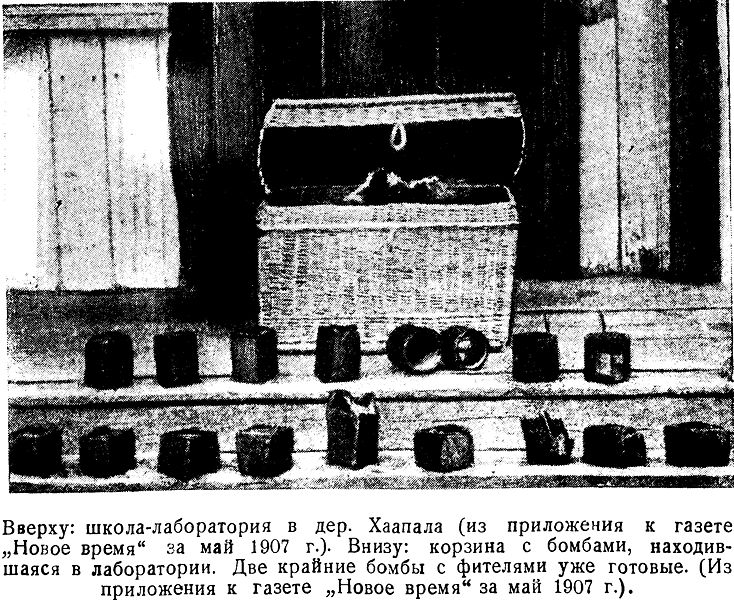
Bolshevik Bombs Discovered in 1907
Joe Hill
January 10, 1914 – IWW labor organizer/folk singer Joe Hill, allegedly killed two men during a grocery store hold-up on this date. He was ultimately framed for the murders and executed. (From theDaily Bleed)

January 10, 1957 – The Southern Christian Leadership Conference (SCLC) was founded on this date, with Martin Luther King, Jr. becoming its president. (From theDaily Bleed)

January 10, 1994 – The U.S. Supreme Court let stand the implementation of North American Free Trade Agreement (NAFTA) despite the lack of an Environmental Impact Statement. (From the Daily Bleed)

Thursday, November 1, 2012

Today in Labor History--November 1


African Free School, New York, Lithograph by student Patrick Reason
November 1, 1797 – The First African Free School was established in New York. (From the Daily Bleed)


November 1, 1835 – The first U.S. General Strike for the 10 hour working day occurred in Philadelphia, Pennsylvania. (From the Daily Bleed)
Osceola

November 1, 1836 – Seminole Indian resistance led by Osceola began their resistance to forced removal from their land by the U.S., leading to war with the U.S.  The war ended in August 1842, with the Indians being forced to march to Oklahoma. 1,500 U.S. soldiers died in the 8-year war. (From the Daily Bleed)

November 1, 1910 – The "L'Ecole Ferrer" Modern School was founded in Lausanne, Switzerland by the anarchiste pediatrist Jean Wintsch & Emile Durand. The school taught roughly 30 boys and girls and was supported by about 15 trade unions. (From the Daily Bleed)
The Malbone wreck still sit in the tunnel
 November 1, 1918 - A scab driver crashed a New York City subway train in the Malbone Tunnel during a labor dispute. 97 died and 255 were injured in the tragedy. New York changed the name of the tunnel to erase the memory of the horrible accident and the infamous trial that followed. It is now called Prospect Park and Malbone St. (From Workday Minnesota)

November 1, 1919 – Over 400,000 miners across the country went on strike. Insurgent miners took over the United Mine Workers (UMW) convention in Cleveland — even though union officials tried to exclude rebellious locals. The union was so concerned with suppressing wildcat strikes and dissension among their ranks that they supplied scabs to help mine owners put down the wildcat strikes! The coal miners ignored their union’s orders to cancel the strike for nearly a month. (From the Daily Bleed)


November 1, 1950 – Two Puerto Rican Nationalists attempted to assassinate President Truman. In 1954 other Nationalists opened fire in the House of Representatives, wounding five Congressmen. They were sentenced to 50 years imprisonment, but were later pardoned. (From the Daily Bleed)


November 1, 1954 – Algerians revolted against French colonial rule, beginning a bloody 7½ year war which ultimately resulted in Algerian independence. (From the Daily Bleed)

Saturday, October 13, 2012

Today in Labor History—October 13


Roosevelt Portrayed As Hard On Boss--But He Threatened Troops Against The Workers

October 13, 1902 – Teddy Roosevelt threatened to send in federal troops as strikebreakers to crush a coal strike. (From the Daily Bleed)
Ferrer's Execution, Portrayed in Stained Glass by Flavio Costantini (from the Stelton Modern School Website)
 October 13, 1909 -- Francisco Ferrer, founder of the "Modern School" movement, was executed in Spain by the Catholic Monarchists. Ferrer was an anarchist educator who opposed the Church’s monopoly over education in Spain and created that state’s first secular, co-educational schools that taught poor and affluent children side by side. On July 28, martial law was declared throughout Spain, accompanied by brutal military repression. In September, Ferrer was captured and thrown in the fortress of Montjuich in Barcelona. During a kangaroo court he was convicted of fomenting the insurrection and was executed by firing squad on October 13, 1909. His execution led to worldwide condemnation and protests. George Bernard Shaw, H. G. Wells, Sir Arthur Conan Doyle, as well as anarchists and radicals like Peter Kropotkinand Emma Goldman protested the execution. (From the Daily Bleed)

October 13, 1909 – Demonstrations were held throughout Europe in protest of the execution of Francisco Ferrer. Violent confrontations between protesters and police occurred in Paris, where over 500,000 people turned out. 20,000 demonstrated in Argentina and led to a General Strike. (From the Daily Bleed)

October 13, 1934 – In what was either its first and only principled stand or just one of its first of many expressions of economic nationalism, the AFL voted to boycott all German-made products in protest of Nazi antagonism to organized labor within Germany. (From the Daily Bleed)

October 13, 1947 – A Chilean mine-worker strike occurred during this month.(From the Daily Bleed)

October 13, 1985 - Over 1,100 mostly female and minority office workers went on strike against Columbia University in New York City, ultimately winning union recognition and raises. (From Workday Minnesota)

October 13, 1999 – Workers at a Del Monte subsidiary in Izabel, Guatemala, were forced to quit their jobs at gunpoint, as bosses attempted to prevent a strike. (From the Daily Bleed)

Wednesday, October 3, 2012

Today in Labor History—October 3


October 3, 1902 - President Theodore Roosevelt met with miners and coal field operators and tried to settle the 5-month long anthracite coal strike, the first time a president had personally intervened in a labor-management dispute. Three weeks later, the miners settled. (From Workday Minnesota)

October 3, 1915 – The World Federation of Trade Unions (WFTU) was founded. (From the Daily Bleed)

October 3, 1920 – The Modern School at Clivio, Italy was reopened and then shut down again by the government. (From the Daily Bleed)

October 3, 1932 – All 164 students at Kincaid High School in Illinois walked out on strike to protest their school’s use of scab labor to provide heating coal. (From the Daily Bleed)

October 3, 1945 – A seven-state Greyhound bus strike took place. (From theDaily Bleed)

October 3, 1967 – Woody Guthrie died of Huntington's disease at the age of 52. (From the Daily Bleed)

October 3, 1970— Baseball umpires called their first strike (against employers instead of players). (From the Daily Bleed)
Mural dedicated to the Hunger Strikers, Derry, Northern Ireland
 October 3, 1981 -- A hunger strike by Irish nationalists at Maze Prison in Belfast, was called off after seven months and ten deaths. Striking prisoner Bobby Sands, who was elected to parliament from his jail cell during the hunger strike, eventually died from his protest. (From the Daily Bleed)